


You know you have valuable expertise to share — insights that could help others solve their toughest problems. You’ve probably already published a blog (or hundreds), or are dabbling in content partnerships. So how do you expand your reach beyond your existing audience and establish your brand as a trusted authority (oh, and with little budget)?
The answer lies in one of the most effective, yet often underutilized, content strategies: guest blogging. Guest blogging is about building partnership, and sharing your expertise with other brands. It’s a powerful two-way street — you get access to their trusted audiences, and they get high-quality content for their readers (and ideally vice versa, we will explain the power of the guest post swap).
This guide will walk you through how to master the art of guest blogging to fuel your small business growth, and how a customer relationship management (CRM) system can help you organize your work.
Benefits of guest blogging
Guest posting or guest blogging significantly boosts brand awareness by introducing your business to new, large audiences on established websites. It’s also important for search engine optimization (SEO), as earning high-quality backlinks from reputable sites improves search rankings.
Regularly sharing your expertise establishes your business as a thought leader, building trust with potential customers. And of course, it’s good for your wallet by including a clear call to action (CTA), guest posting serves as a direct pipeline for generating quality leads.
According to the Salesforce State of Sales Report, high-performing small businesses are 1.9x more likely to use technology to collaborate across teams than struggling ones. This collaborative spirit extends to your content strategy, where guest blogging is a key partnership opportunity.
Market your SMB with Salesforce AI
First, find the perfect partners for guest blogging
For small and medium businesses (SMBs), guest posting is a direct way to reach potential new customers, generate quality backlinks that improve your search ranking, and build a reputation as a thought leader.
Choosing the right platform is the foundation of a successful guest blogging strategy. You wouldn’t set up shop on a street with no foot traffic, and the same principle applies to online content. You need to partner with sites that have an audience that aligns perfectly with your ideal customer. For instance, if you run a small business selling sustainable packaging, you should target blogs that focus on ecommerce, environmental stewardship, or startup logistics.
A few key factors should guide your search for potential partners:
Audience overlap: Does the site’s readership include the people who need your product or service? Look at the comments section on their posts — who is reading and engaging with their content? What size audience does your potential partner have and are they engaged?
Domain Authority (DA): A site’s Domain Authority (DA) score reflects its search engine ranking power. Partnering with a site that has a higher DA than yours means the backlinks you receive are more valuable, boosting your own site’s authority. Try to find a partner within range so it’s an equal give and take.
Content quality: The blog you write (and the blogs your new partner writes) should be high-quality, relevant, and well-written content. Does your potential partner share other people’s content and links? Do they write quality content? Then they are more likely to collaborate with you.
The 80/20 rule: Does your potential partner share 80% of their own content and at least 20% of other people’s content? That’s a great rule of thumb to go by when considering collaborative content.
Pro tip: Don’t be afraid to reach out, but warming up to partnership is always nice too. You can begin by sharing their content, social posts, or complimenting their work. You don’t have to rush into it: take your time and build up to asking them to collaborate.
Kickstart your SMB with Starter Suite
See results from day one with a CRM designed for SMBs — the all-in-one suite for productivity. It all starts with Starter Suite.
What do you write? Tips for small business guest post ideas
Once you’ve identified a promising partner, the real work begins: creating an article that adds genuine value to their audience while subtly positioning your small business as the expert solution. Your goal is to provide actionable advice that naturally leads the reader to see your business as a trusted resource – no sales pitches.
So, do your research. What specific, immediate challenges is their audience facing? Your blog post should offer a concrete solution. For example, if you sell a specialized scheduling software, your guest post could be something like: “Three Simple Ways Small Teams Can Reclaim Two Hours a Day.”
Use real-world examples from your startup’s journey or case studies from your early customers. This authentic experience makes your advice more credible. When you speak about your expertise, remember that a strong CRM system is often at the core of a growing small business. A great marketing tool helps organize just about everything from those customer success stories you need for your content to the inquiring leads from each blog.
When appropriate, link back to relevant, high-value pages on your own website, like a product page or an existing blog post. This is how you build brand awareness, credibility, and backlinks (for the search engines to index your website).
Guest blogging for small business marketing and sales
The benefits of guest blogging extend far beyond simple website traffic. It’s a key tactic for building a comprehensive marketing and sales strategy for your small business. When you consistently publish insightful content on reputable sites, you naturally build your brand’s credibility. This authority makes it easier for your sales team to open doors and for your marketing efforts to be taken seriously.
Building authority and leads
Think about the content you create through the lens of all teams: sales, marketing, service, commerce, and operations. A guest post about “Streamlining Customer Service for Startups” not only establishes your service expertise but also serves as a strong lead-generation tool. Here’s how:
- Author bio: Your author bio is the most important real estate on the page. Use it to provide a clear, compelling reason for readers to click through to your site: a free resource, an e-book download, or a link to your product trial page.
- Backlink quality: The anchor text (the clickable words) for your link back to your site should ideally use your target keyword or a relevant phrase. A high-quality backlink from a respected domain signals to search engines that your small business is a trusted source of information.
- The data advantage: Your ability to grow depends on insights and actions you can take based on your customer data. Look at your content, your metrics (visitors, clicks, bounce rate) and keep improving based on insights and reporting.
Integrating AI into your strategy
AI can help a lot with your blogging strategy. With tools like Google Gemini (content creation), Optimizely (project management and metrics), Buffer (social media reporting), and Salesforce (CRM), you are heavily assisted while writing.
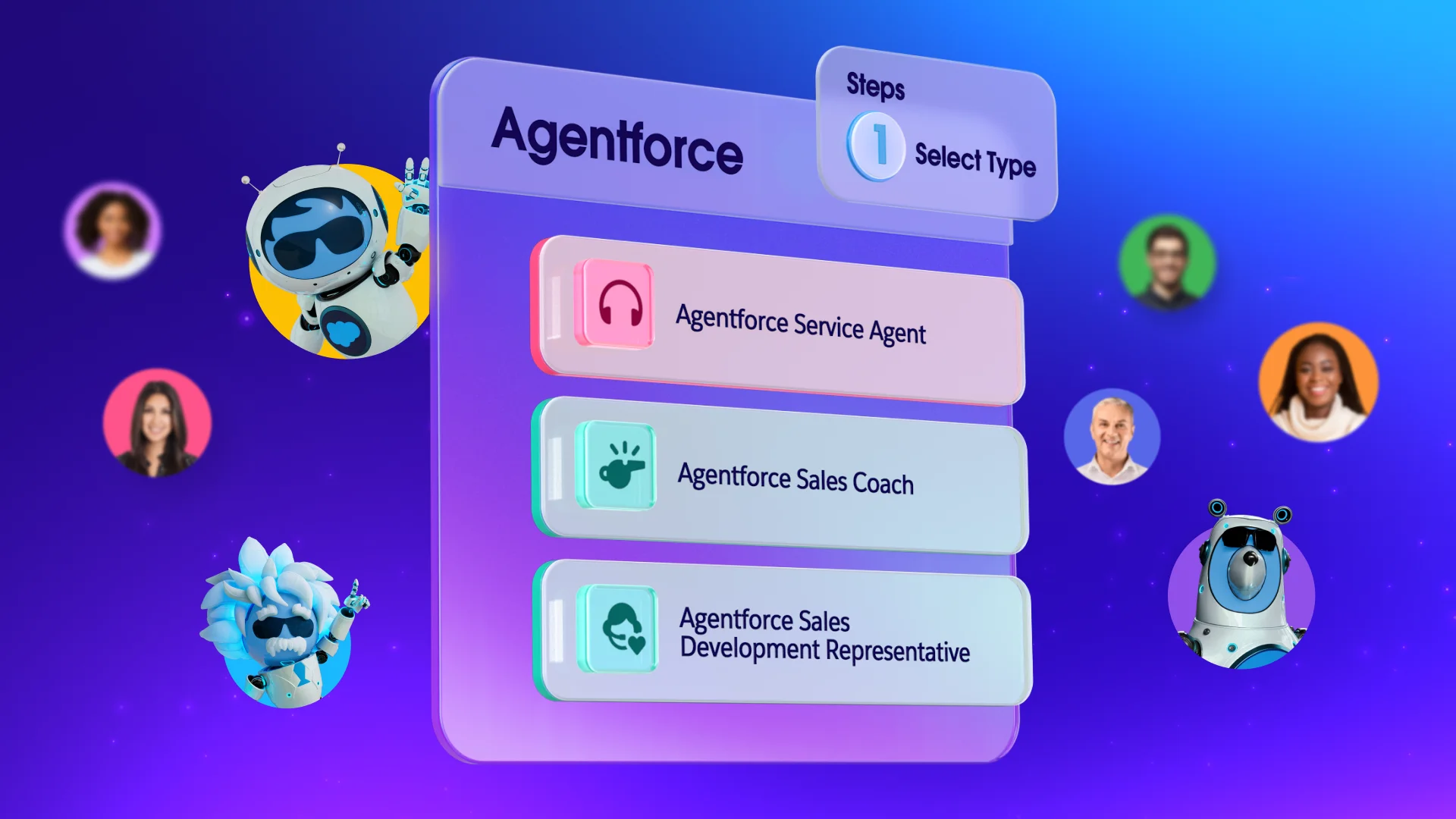
As your business grows, managing the flood of new leads and customers generated by successful guest blogging becomes a new challenge. This is where automation and intelligence come into play. Tools like Agentforce 360, a platform for building and managing intelligent agents, can help you manage and route new inquiries and leads that come in through your guest blogging efforts.
By linking your guest post’s specific call-to-action to a landing page where the leads are automatically captured and qualified within your CRM for small business system, you turn a passive content strategy into an active sales pipeline. This ensures that the effort you put into guest blogging for small business growth is immediately translated into tangible business outcomes.
Here’s how a marketing CRM helps you in your guest-posting strategy:
- Stores all potential guest post opportunities, contact details, and site metrics in one organized database, eliminating scattered spreadsheets.
- Allows you to send personalized pitch emails at scale using templates and automatically track opens and clicks, while setting up timed follow-up sequences.
- Creates a clear pipeline to manage the guest post journey from initial pitch to final publication, ensuring no step is missed.
- Logs all interactions with editors and site owners, providing a complete, shared history that helps nurture long-term publishing relationships.
- Tracks the success rate of your pitches and connects published posts to key metrics like link acquisition and referral traffic for better ROI analysis.
Maximize Your CRM Productivity
Learn how small and growing businesses are taking productivity to new levels with Salesforce CRM in this free e-book.
Guest blogging for the win
Guest blogging is more than just a content tactic — it’s a powerful business development opportunity for small businesses and startups looking to accelerate growth, build authority, and directly connect with new customers. By strategically selecting partners, creating high-value content, and integrating your efforts with a robust system like Salesforce, you can turn borrowed attention into lasting success.
Start your journey with the Free or Starter Suite today. Looking for more customization? Explore Pro Suite. Already a Salesforce customer? Activate Foundations to try out Agentforce 360 today.
AI supported the writers and editors who created this article.
Frequently Asked Questions (FAQs)
Guest blogging is the practice of writing and publishing an article on another company’s website or blog. It’s a cost-effective way to build brand authority, gain exposure to new, relevant audiences, and generate high-quality backlinks.
Focus on sites with audience overlap, ensuring their readers are your potential customers. Also, partner with sites that have a higher DA and will provide more valuable backlinks. And, vet for content quality to ensure your brand is associated with credible and well-written material.
Your guest post should focus on providing genuine value by solving a specific, immediate problem for the host site’s audience. Use actionable tips, demonstrate your expertise with real-world examples, and ensure the content naturally leads the reader to view your business as a trusted resource.
The author bio acts as a compelling CTA, providing a clear reason for the reader to click through to your website. Use it to offer a high-value resource, like a free e-book, a trial of your product, or a link to a relevant landing page, rather than just linking to your homepage.
Successfully managing leads from guest blogging requires integrating your efforts with a CRM system. Salesforce is a solution that allows small businesses to automatically capture and qualify leads from a guest post’s CTA, ensuring that content-driven interest is immediately routed into a proactive sales pipeline for follow-up and tracking.


