


I’ve had a long relationship with Adobe the company as a journalist. The people I know there are without exception hard working, friendly and genuine. And on a related issue, I also have a soft spot in my heart for Adobe InDesign.
It’s the industry standard for desktop publishing, and I’ve used it daily for 20 years working on print magazines. So its interface is familiar to me, and for all its faults, it generally gets the job done. But something happened recently that made me wary of my future with it, and I’m considering InDesign alternatives.
Someone close to me – not a professional designer, but someone who uses InDesign regularly for her personal creative projects – has been having a dreadful time of it. Her problems started when she got a new laptop.
Article continues below
Stuck with the beta

This, to say the least, did not go well. The Beta periodically stopped working entirely. A quick search online revealed that this has happened to a lot of people, with forums and Reddit full of frustrated users in the same boat.
Adobe’s own Creative Cloud app would sometimes cheerfully report that the software was “compatible with their device” while simultaneously refusing to let them open it. One Reddit user described being told by Adobe’s tech support, after an hour on remote access, that they were “very lucky InDesign worked before” and should simply buy a new laptop.
Eventually, she managed to sidestep the Beta problems by switching to another laptop; one that could run standard InDesign 2025. Problem solved, she thought. She transferred her files across, relinked her images, and got back to work.
Then it happened again
Except it wasn’t solved at all. A month’s worth of work vanished. Images disappeared from the document. Whole pages went blank. She only discovered the extent of it when she tried to export to PDF and got an error message. She saves regularly – obsessively, even – but because she’d been saving over the same file, there was nothing to revert to. Working from memory and whatever PDF drafts she had, she’s now having to rebuild everything from scratch.
Her working theory is that the corruption came with the file when it was transferred from the Beta version; hiding quietly inside the document until it caused havoc. Whether or not that’s what actually happened, the damage has been done.
When I posted about this on LinkedIn, I heard from a creative director who’d had almost exactly the same experience: 95 per cent of a large annual report gone, no useful help from Adobe support, and eventually having to rebuild everything from a PDF proof. It turns out this is not as rare as it should be.
I wouldn’t want to scare anyone unduly. Obviously, millions of users on Intel/AMD Windows or Apple Silicon Macs use the stable version of InDesign every day, without these kind of failures. But at the same time, if they do happen to you – or someone close to you – you might consider your future with the product.
I’d advise you to steer clear of the beta right now, and use the standard version if at all possible. And with all this in mind, if you’re buying a new Windows laptop, pay attention to the processor. If it’s not Intel or AMD, check with Adobe first whether the full version of InDesign is compatible.
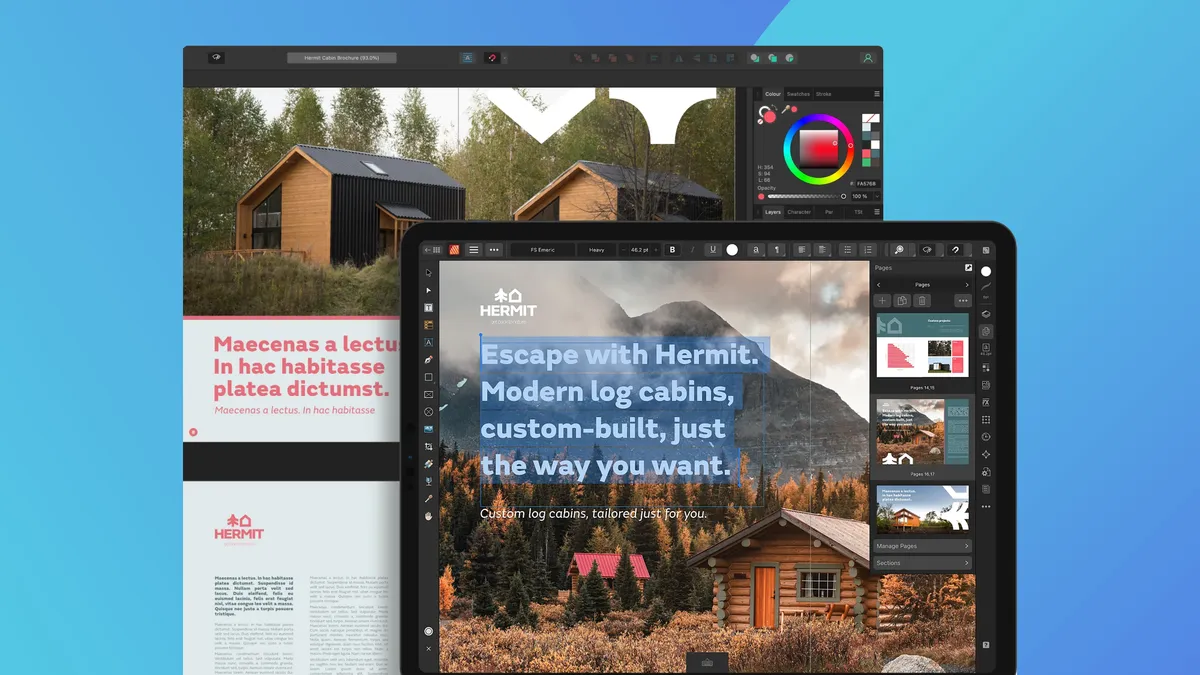
From my own perspective, I’m now thinking it’s time to get on board with Affinity Publisher, which has a similar feel to InDesign and was recently acquired by Canva. This is, however, not something I’m looking forward to. There’ll be a learning curve, and it won’t be identical. I’ll also miss the ‘feels’ of working in an interface that has served me well across many years. But at least I’ll be able to upgrade my hardware without limitation or having to rely on an unstable Beta.
We approached Adobe for comment. It shared guidance on beta pages and InDesign (beta) support for Windows ARM-based machines.


