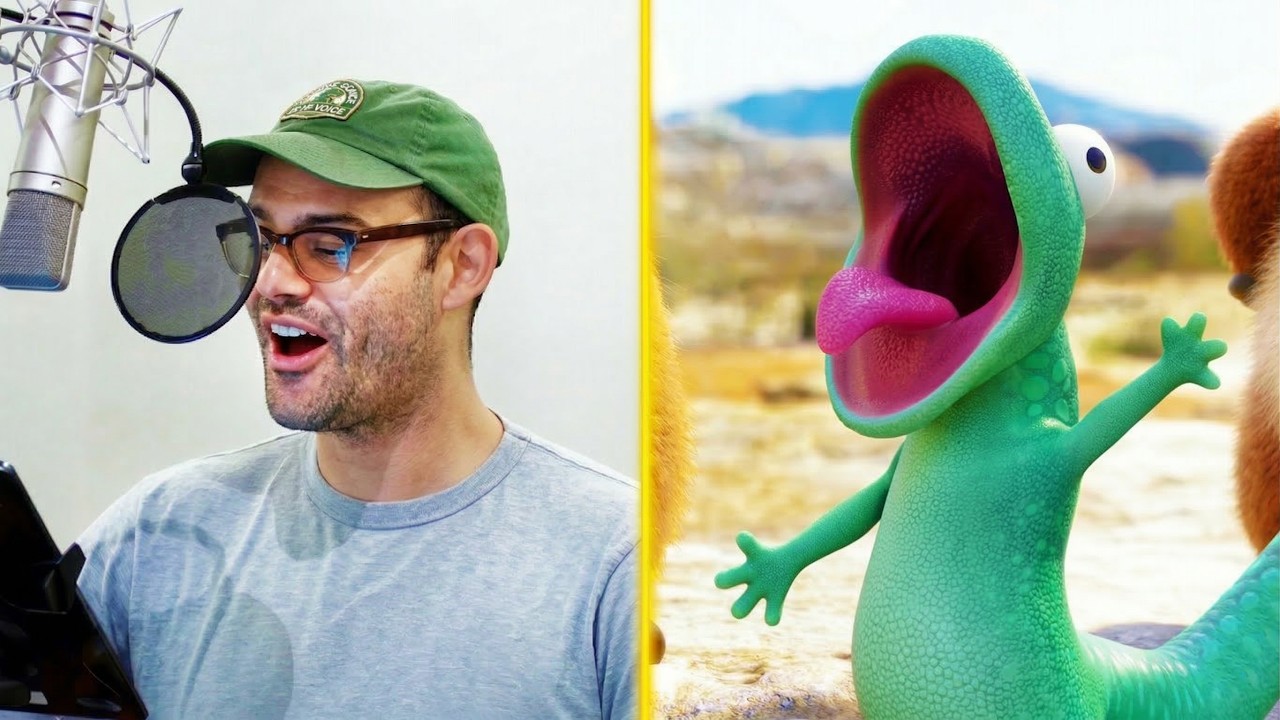


Pixar’s Hoppers has had people hopping to cinemas all over the world in its first week, grossing $88 million worldwide. That makes it Pixar’s strongest debut for an original animated movie (i.e., not a sequel) since Coco back in 2017.
Already surpassing expectations, the film’s being being hailed as a comeback for Pixar after Lightyear and Elio underperformed at the box office. And the good news for fans is that the Disney animation studio has been revealing details about the film’s inspirations and development process. Here are six details from the making of Hoppers that might surprise you (also see the Pixar rules of storytelling and Disney animation principles).
01. The inspiration for Hoppers came from retro tech
Article continues below
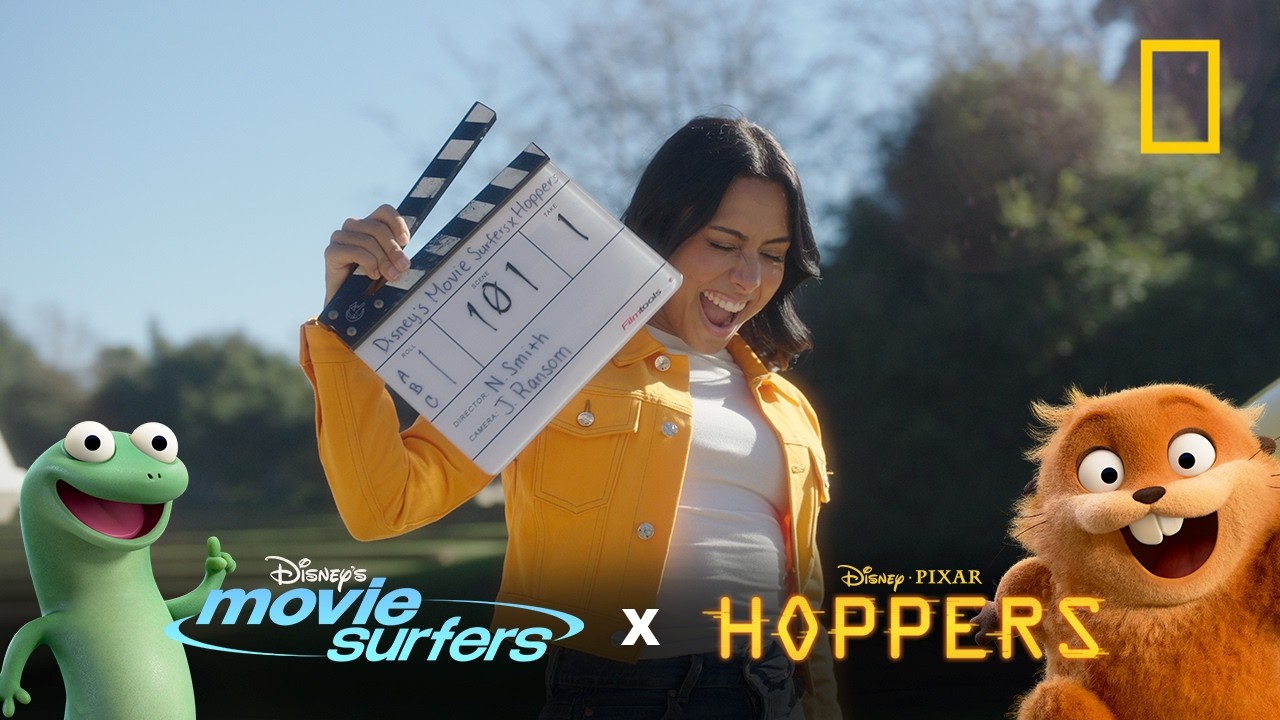
In conversation with Michelle Khare in the video above, Daniel reveals that the inspiration for the movie came not from sci-fi but from his recollection of an old nature documentary where robots were used to observe animals in their natural habitat.
In Hoppers, that retro tech for wildlife watching becomes a futuristic technology that allows humans to transfer their consciousness (or hop) into lifelike robotic animal bodies. Make sure you also check out the Hoppers ‘live cam’ on YouTube, which clearly shows the influence of wildlife documentary footage.
02. Animators had a real 3D model of the Hoppers world

Although Pixar’s animation is all digital, the Hoppers behind-the-scenes video reveals that the studio had a physical 3D model of the movie’s environment. Producer Nicole Grindle explains that this was commissioned by the production designer to help the team get an idea of how it would feel to be inside that world.
The team was able to make 3D scans of the model to serve as a starting point for their world building.
03. Hoppers’ director crawled into a real beaver lodge

Speaking of getting a feel for the environment, Disney and Pixar often go to great lengths to get to know the subject matter of their animated movies, including field trips for inspiration. In the case of Hoppers, this meant going to Yellowstone National Park to try to see some beavers.
Daniel says the beavers didn’t collaborate by showing themselves, but he did go to the length of getting down on the ground and crawling inside an abandoned beaver lodge to truly get in contact with the environment of the movie’s world and see what it would look like for Mabel when she’s in the robot beaver body.
04. Ellen could have been even bigger
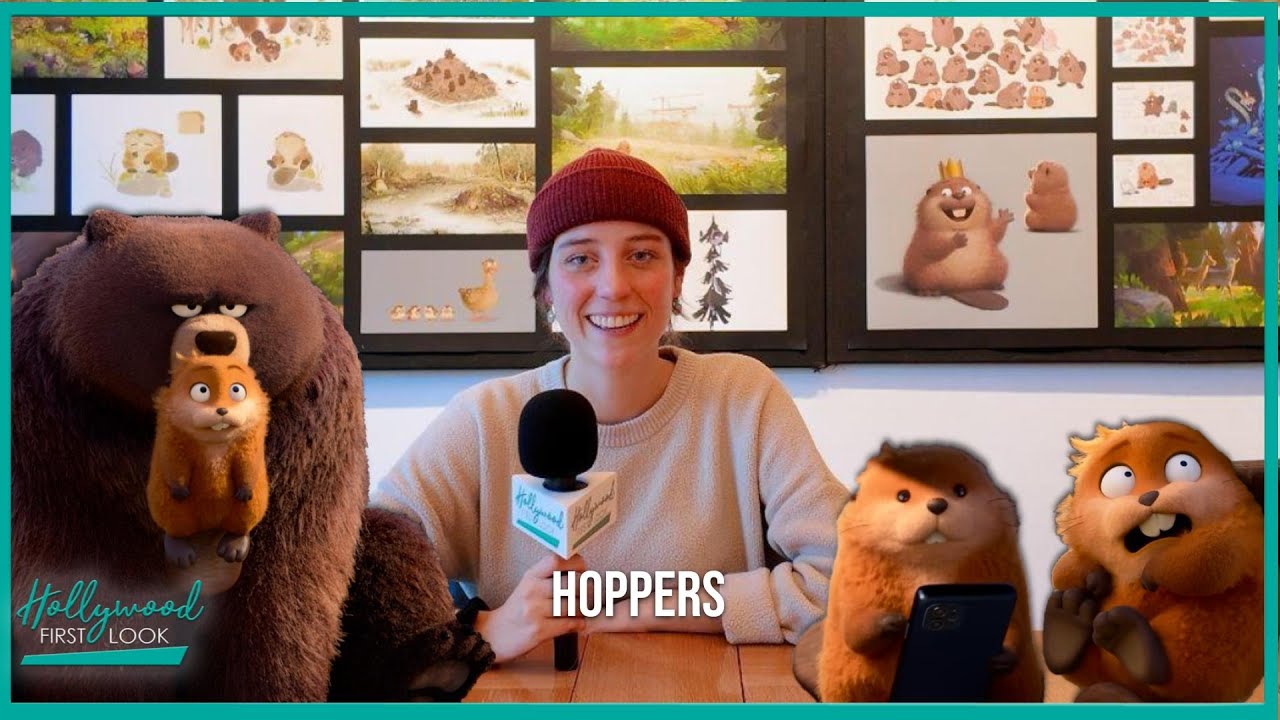
Later in the video, we meet character design Anna Scott who shows some of the movie’s expression sheets and talks about how she studied how beavers move, particularly how they swim, and how she captures recognisable personality in animal faces.
In the interview above, Anna suggests that Ellen, the bear in Hoppers, could have been even bigger. She says her first inclination was to make the bear huge but there was a “lot of back and forth” due to the challenge of finding the right balance of realism vs the film’s stylised look as well as the need to consider the proportions of the different creatures and to fit everything into the frame.
Anna also reveals that the human version of Hoppers’ main character, Mabel Tanaka, was the character that saw most changes, since she’s quite short but needed to look tough. In an interview with MovieWeb, she said: “She’s supposed to be a little bit more androgynous, very passionate, she’s supposed to be tough, wild. So, representing her in a way that was faithful to her character that other people could also get behind was an ongoing battle.”
05. An early Hoppers animation test looked like Studio Ghibli
Early in the process of making an animated movie comes the animation tests. These are used to explore character movement, personality and storytelling. Even for 3D animated movies like Hoppers, they’re often done in 2D to save time and resources before committing to the complex process of 3D modelling and rigging.
The process of making Hoppers began over five years, and former Pixar story artist recently shared a glimpse of an early animation test he made back in 2020. Fans have been surprised to see that that the animation has an almost Ghibli-esque look in the serene scene of King George and Mabel travelling down a river.
06. Humour influenced Hoppers’ visual style

Is Disney’s video above, Pixar’s Visual effects supervisor Beth Albright and production designer Bryn Imagire reveal that Hoppers’ zany humour also had an impact on its visual style.
“We had to try to be really cartoony,” Bryn says. “Daniel’s style has some absurd and ridiculous beats to it. At the same time, there are emotional stakes, and balancing those things is tricky to do.” Beth adds.
In terms of software, Pixar’s in-house pipeline typically uses its own Presto animation system and RenderMan, its physically-based rendering software for final frame rendering. The OpenUSD framework is used for constructing 3D scenes, Houdini and Solaris for FX and lighting along with Autodesk Maya for certain modeling and rigging tasks.
See our guides to the best animation software and the best rendering software to learn more.
See the trailer below for some behind-the-scenes glimpses of the voice recording for Hoppers. For more animation inspiration, see how Unreal Engine 5 was used for KPop Demon Hunters.