


A cold calling list is a targeted list of prospects you plan to call, usually with their name, job title, company name and phone number. A good cold call list also includes enough company and contact context to help your team decide who to call first and what to say when they connect.
If you want to build a cold calling list, start with your ideal customer profile, gather contact data from reliable sources and keep the list current. You can do that with a B2B data provider like UpLead or build the list manually with sources like LinkedIn, company websites and other public business data. The right choice depends on your team, budget and how much time you can spend on research.
UpLead Quick Take
A strong cold call list helps sales reps start with the right contacts
- Use a targeted cold calling list, not a generic call sheet full of outdated or irrelevant contacts.
- Prioritize prospect phone numbers, job title, company size and a short note on why the account fits your target market.
- For most sales teams, the best list-building process is the one that stays up to date and is easy to reuse across repeat outreach efforts.
What Is a Cold Calling List?
A cold calling list is a list of prospects your sales team plans to contact by phone. In B2B sales, it usually includes the contact’s name, job title, company and phone number, plus the details reps need to judge whether the person is a real fit.
The strongest cold calling lists are targeted, not generic. Instead of collecting random phone numbers, they focus on the right contacts, usually decision makers or people close to the buying process, inside companies that fit your ideal customer profile.
At a Glance
An effective cold calling list helps sales teams identify potential customers, route the right accounts to sales reps and support a cleaner sales process.
The best calling lists are built for action. They give reps the right contacts, enough context for a relevant sales call and a simple way to keep the list up to date over time.
Why Your Business Needs a Cold Calling List
A cold calling list gives your team a repeatable way to find and contact relevant prospects instead of starting every outreach cycle from scratch. When the list is targeted well, reps spend less time chasing bad-fit accounts and more time talking to people who actually match your product or service.
It also helps with consistency. A structured list makes it easier to assign accounts, segment outreach by job title or company size and personalize calls with the right context. That matters because cold calling works better when reps know who they are calling and why the prospect belongs on the list in the first place.
What Should a Cold Calling List Include?
A useful cold calling list should include verified contact details, company-fit data and a small amount of context for personalization. At a minimum, you want enough information to confirm that the person is a real prospect and that your rep can open the call with a relevant message.
- Full name
- Job title or role
- Company name
- Direct phone number or the best available business phone number
- Email address, if your workflow includes follow up emails
- Industry
- Company size or employee count
- Location or time zone
- Context such as recent company news, likely pain points or a reason the account fits your ICP
If your list only contains names and phone numbers, it is harder to prioritize the right prospects. Adding job title, company size and a small amount of context makes the list more useful for segmentation and more useful when it is time to call.
| Field | Why it matters for cold calling |
|---|---|
| Direct dials or the best available business phone number | Gives reps a faster route to the right person and reduces time lost on switchboards. |
| Job title and role | Helps you identify decision makers and sort the list for the right sales reps. |
| Company size and industry | Makes it easier to segment by fit and avoid bad targets before you start calling. |
| Contact details and account notes | Supports follow ups, better prioritization and a more relevant opening line on each sales call. |
How to Build a Cold Calling List
To build a cold calling list, define your ideal customer profile first, then source contacts that match it. From there, verify the data, segment the list and decide which records are worth calling now versus later.
For most teams, there are two practical ways to do that. You can use a B2B data provider to build a targeted list faster or manually build the list from multiple sources if you need a smaller and more custom set of contacts.
Method 1: Build a Cold Calling List with UpLead
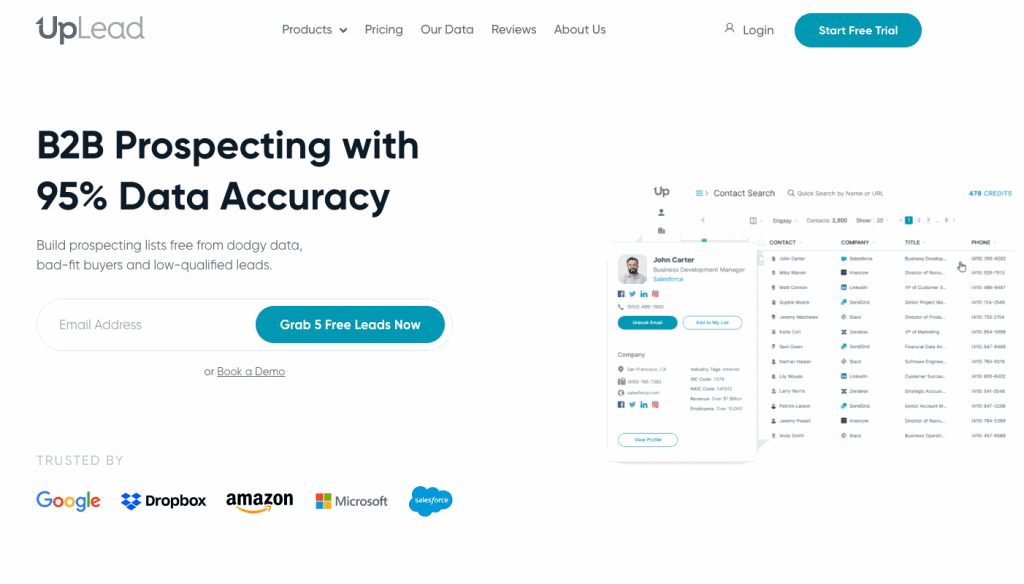
If you need a faster way to build a targeted cold calling list, a B2B data provider can save a lot of manual research time. With UpLead, you can filter contacts by the criteria that matter to your team, review matching prospects and save them into a dedicated list for outreach.
This method works best when you already know the type of companies and buyers you want to reach. Instead of searching company websites and LinkedIn profiles one by one, you use filters to narrow the list to the right prospects before your reps start calling.
Here is the basic workflow inside UpLead:
In your UpLead account, open Contact Search.
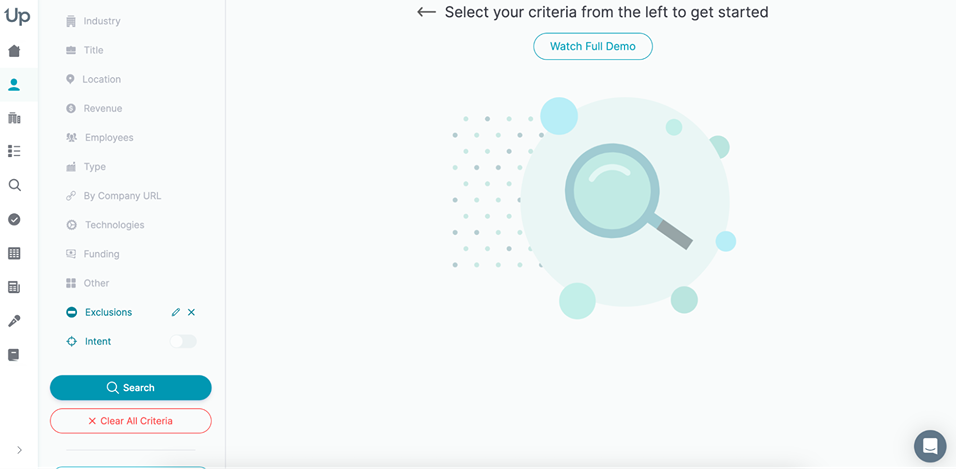
Refine the search with the filters that match your ICP, such as industry, company size, location or other firmographic criteria.
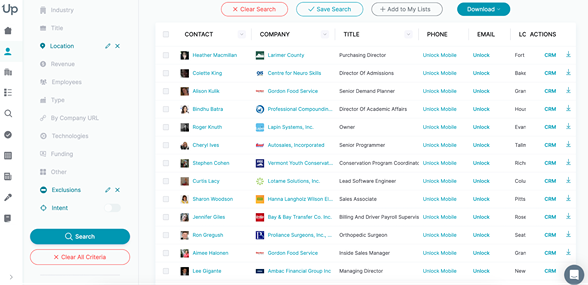
Review the matching contacts and select the people you want to add to the list.
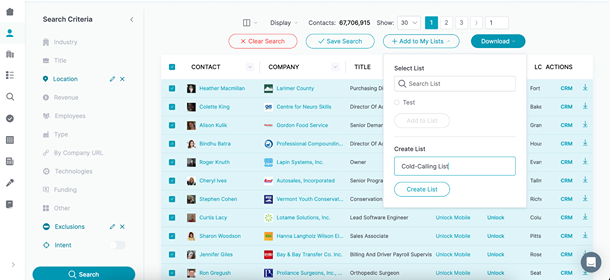
- Select Add to Lists and create a new list.
- Open Contact Lists to review the saved list and prepare it for outreach.
This route is usually the better option when your team needs more than a handful of contacts, wants direct dials where available and needs to build lists on an ongoing basis.
Method 2: Build a Cold Call List Manually
You can also build a cold call list manually with sources like LinkedIn, company websites, industry directories and other public business information. This works best when you need a smaller list or tighter control over each account.
The tradeoff is time. Manual list building usually means more searching, more cross-checking and more cleanup before the list is ready to use.
- Define the accounts and buyers you want to reach.
- Use sources like LinkedIn, company websites and public business pages to identify matching prospects.
- Record the fields you need, including job title, company name, phone number and any notes that explain why the contact belongs on the list.
- Check the list for stale or duplicate records before your team starts calling.
If you go manual, use multiple sources. A phone number from one source and company context from another is often more reliable than copying a single record without checking it.
Should You Buy Cold Calling Lists?
You can buy cold calling lists, but quality matters more than speed. A purchased list only helps if the records are current, the sourcing is legitimate and the contacts still match the audience your team is trying to reach.
The biggest risk is buying outdated or irrelevant contacts. That leads to wasted calls, bad-fit prospects and more cleanup before the list becomes usable. If you buy a list, check the vendor carefully and stay conservative with your claims about list quality until you have reviewed the data yourself.
Compliance matters too. If your outreach touches consumer or home numbers, the FTC says outbound telemarketing calls generally cannot be made before 8 a.m. or after 9 p.m. local time unless prior consent applies. For that reason alone, list sourcing and list usage should be reviewed together.
4 Tips for Building a Cold Calling List
A stronger cold calling list starts with targeting, not volume. Before your team worries about how many people to call, make sure the list is built around the right accounts and kept current enough to be useful.
1. Create a Clear Customer Profile
Start with your ideal customer profile. Define the industries, company sizes, roles and other traits that make an account a fit for your offer. A clear customer profile makes it easier to choose the right filters, spot bad-fit leads and avoid building a list that looks large but performs poorly.
2. Use Reliable Data Sources
The source matters as much as the list itself. Whether you use UpLead, LinkedIn Sales Navigator, company websites or a mix of sources, the goal is the same: build from data you can review and trust instead of copying random phone numbers into a spreadsheet.
3. Look for Direct Dials
Direct phone numbers can make a cold calling list much more practical because they reduce the time reps spend trying to reach the right person through a switchboard or gatekeeper. When direct dials are available, they are often one of the most valuable fields on the list.
4. Keep the List Updated
List quality drops when records get stale. People change jobs, companies change structure and old numbers stop being useful. Review the list regularly, remove low-value records and keep notes on which contacts are still worth working.
How to Use a Cold Call List Effectively
To use a cold call list effectively, segment it before you start dialing. Reps should know which contacts come first, why those contacts fit the campaign and what message is most relevant for each segment.
- Segment the list by factors like industry, company size, geography or job title.
- Review LinkedIn profiles, company pages or recent company news before calling.
- Work in call blocks that match local business hours.
- Use a follow up plan so good prospects do not disappear after one missed connection.
If your workflow includes scripts, keep them as support, not as a substitute for list quality. A script helps less when the list is poorly targeted or the contact data is stale.
FAQs
A cold calling list is a list of prospects a sales team plans to contact by phone. It usually includes names, job titles, company details and phone numbers, plus enough context to decide who to call first.
You can get phone numbers for cold calling from a B2B data provider, LinkedIn-led research, company websites and other public business sources. The safest approach is to verify the data before reps use it and make sure the list still matches your target audience.
Buying cold calling lists can save time, but quality matters more than speed. If the list is outdated, low quality or poorly sourced, your team will spend more time cleaning records and calling the wrong people.
What You Need to Remember About Cold Calling Lists
A good cold calling list is targeted, current and practical for the team that will use it. Start with your ideal customer profile, collect the right fields and keep the list fresh enough that reps are not wasting time on old or bad-fit contacts.
If you need a faster workflow, a platform like UpLead can help you build and organize a cold call list at scale. If you build the list manually, use multiple sources, verify what you can and stay disciplined about who belongs on the list before your team starts calling.


