


B2B SaaS lead generation is one of the hardest disciplines in software growth. Building a consistent pipeline of potential customers takes a mix of inbound and outbound lead generation strategies: content marketing, SEO, cold outreach, LinkedIn, paid advertising and referral programs. You also need the right tools and a clear ideal customer profile to connect it all.
This guide covers 11 proven lead generation strategies for SaaS companies and startups, the tools that support each one, and practical guidance on qualifying and converting leads at every stage of the sales funnel.
What is B2B SaaS lead generation?
B2B SaaS lead generation is the process of identifying, engaging, and converting potential customers into paying customers for a SaaS product. The SaaS industry runs on subscription revenue, which means lead generation and customer retention are equally critical to long-term growth. 91% of marketers say generating leads is their most important marketing goal, and for SaaS companies running on subscription revenue, a consistent pipeline is the engine that keeps growth moving.
What makes B2B SaaS lead generation different?
Three factors separate SaaS lead generation from most other B2B categories. Understanding these is essential for SaaS startups and mature companies alike, because the same dynamics affect how you allocate budget and which channels to prioritize.
Most enterprise SaaS purchases involve multiple decision makers, from the end user to the finance lead who approves the budget. A single champion inside an account rarely closes deals alone, which means lead generation needs to reach and convince several stakeholders, not just one.
The total addressable market for most SaaS products is narrower than it looks. Your software solves specific problems for a specific target market, so generic outreach wastes budget fast. Knowing your target audience (their industry, company size and role) is the starting point for almost every effective SaaS lead generation program.
Sales cycles are longer than in most other B2B categories. The buying process for enterprise SaaS typically involves multiple stakeholders, product trials and procurement reviews before a decision is made. Lead nurturing matters more here than almost anywhere else in B2B sales.
Types of SaaS leads: MQL, SQL, and PQL
Three lead types drive different parts of the SaaS pipeline, and treating them the same is one of the most common causes of wasted sales effort.
A marketing qualified lead (MQL) is a contact who has engaged with your content or advertising but isn’t ready for a sales conversation yet. A sales qualified lead (SQL) has been vetted by your sales team and is ready for direct outreach or a product demo. A product qualified lead (PQL) has already experienced value inside your product through a free trial or freemium tier and is showing buying signals.
Knowing which type of lead you’re working with shapes every part of your outreach: the message, the timing and the next step. Lead quality is determined by how closely a prospect matches your ICP and how far along they are in the buying process.
UpLead Quick Take
Know your lead types before scaling outreach
- MQLs have shown interest but need more nurturing before a sales conversation is worthwhile.
- SQLs are ready for direct outreach or a demo. Passing MQLs to sales too early is one of the top pipeline killers.
- PQLs have already experienced product value and should be your highest conversion priority.
11 B2B SaaS lead generation strategies
The most effective B2B SaaS lead generation programs combine inbound and outbound channels. Content marketing generates approximately 3x as many leads as traditional outbound at 62% less cost, while cold outreach and paid advertising drive results immediately while inbound efforts build. These 11 strategies cover both sides of that equation, and the strongest SaaS companies use all of them to some degree in their lead generation efforts.
1. Build and distribute high-value content
Companies with active blogs generate 67% more leads per month than those without. For B2B SaaS, that volume compounds over time as each published piece attracts search traffic and builds credibility with buyers before they ever contact sales. Thought leadership content (original research, industry benchmarks and practical how-to guides) builds the brand authority that makes buyers more likely to trust your product when they reach the decision stage.
Effective content marketing starts with finding what buyers actually want to read, not what you assume they care about. Here is how to build a topic pipeline from real buyer language:
- Search your ICP’s job title alongside phrases like “biggest challenge with” or “struggling to” in G2 reviews and LinkedIn comments for your product category.
- Identify the questions that appear repeatedly. Those become your content topics. Prioritize any question that also maps to a product capability.
- For each topic, check what format the top-ranking competitor uses. If it is a comparison table, build a better comparison table. If it is a step-by-step guide, build a better guide. Format-matching matters as much as the topic itself.
- On publish day, distribute through three channels: your email list, LinkedIn as a native post (not a link post) and one or two community groups where your buyers are active.
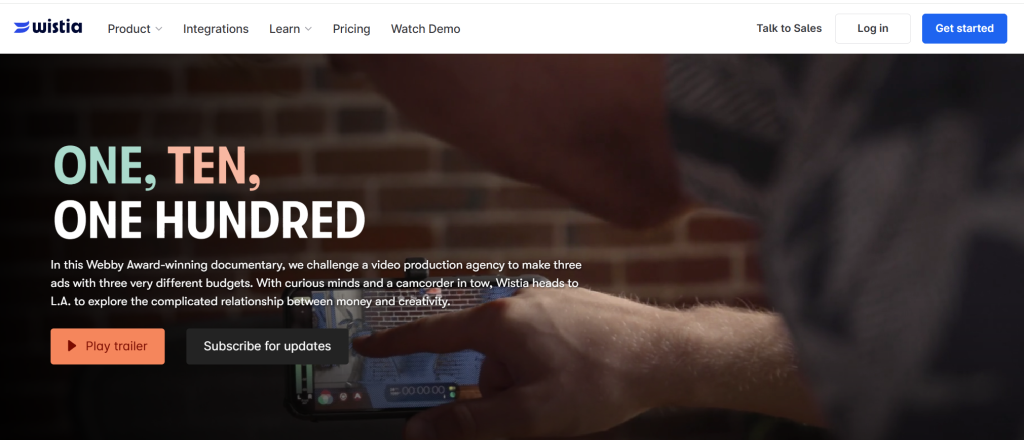
Wistia produced a 4-part documentary series called One, Ten, One Hundred (a film about creative budget and video quality) with no direct product pitch. In the three-week promotional window, the series generated nearly 7,000 leads at a cost per lead under $5 and built a reusable audience for follow-on campaigns.
2. Optimize for organic search (SEO)
SEO is one of the most reliable inbound lead generation channels available. It accounts for 34% of qualified leads on average for B2B marketers, and once a page ranks, it generates pipeline without ongoing ad spend.
Start with bottom-of-funnel queries. Buyers searching for “best Lead Generation software” or “[your category] alternatives” are already in decision mode. Intent-driven B2B SEO shifts focus from high-volume generic keywords to long-tail, high-intent queries that buyers use when they are close to a decision.
To find your first BOFU targets and prioritize them correctly:
- Search your product category in a keyword tool and filter for queries containing “best”, “alternatives”, “vs” or “reviews”.
- Sort by keyword difficulty and prioritize terms below KD 40 with at least 100 monthly searches (these are winnable without a large domain authority).
- Open the top-ranking page for each term and match its format exactly. If the winner is a comparison table, build a better comparison table. If it is a step-by-step guide, build a better guide.
- Once BOFU pages are ranking, work back to mid-funnel educational content that captures buyers earlier in their research process and feeds them into your pipeline over time.
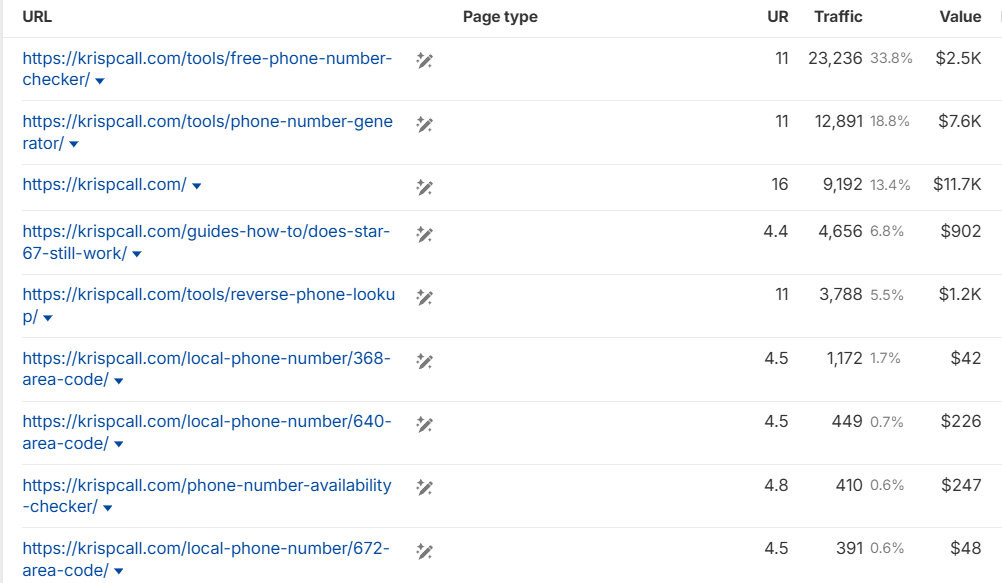
KrispCall grew from 154 monthly organic visits at launch to over 2 million within two years by building 1,000+ programmatic landing pages targeting local phone area codes and number formats. By 2023, 82% of the company’s total site traffic came from those pages, demonstrating how intent-matched programmatic SEO compounds faster than traditional blog-based organic growth.
3. Run cold email and cold calling campaigns
82% of buyers say they accepted a meeting after a series of contacts that started with a cold call. Cold outreach still delivers when it’s targeted and persistent. The problem is usually a weak contact list or generic messages that don’t address the specific pain points of your target audience, not the channel itself.
A clean, verified prospect list built around your ideal customer profile is the foundation. Without accurate contact data, cold email campaigns hit bounces and cold calls reach the wrong people. A high-quality email verifier ensures every address is confirmed before your campaign starts.
Cold emailing is one of the most scalable and cost-effective ways to generate sales leads in B2B SaaS. Multi-channel outreach (combining email, phone and LinkedIn touchpoints) produces the best results. Run through these steps before every campaign:
Checklist
- Define your ICP: industry, company size, job title and specific pain points.
- Build your prospect list using a verified B2B contact database. Never use an unvalidated export.
- Send personalized messages: reference a specific business signal, recent event or known pain point in the opening line.
- Keep the email short and direct with one clear call to action focused on the prospect’s sales opportunities.
- Use follow-up sequences of 3 to 5 touches across email and phone before moving on.
The opening line is where most cold emails fail. Three signals that consistently generate replies when referenced in the first sentence:
- Hiring signal: a target company posting a job title your product supports means they have budget and a live problem. “Saw you’re hiring an SDR Manager. Most teams your size spend six hours a week on manual list-building. We fix that in two clicks.”
- Funding signal: a recent funding announcement means new capital and urgency to grow. Reference the round and connect it to the problem your product solves.
- Competitor signal: a company identified as running a competitor tool through intent data is actively in the market. A direct comparison message works here better than a generic pitch.
Lemlist, a cold email platform, grew from $0 to $20M ARR in six years using cold email as its only acquisition channel and no paid advertising. The company’s own outreach was the proof-of-concept, which turned into a case study their entire customer base could replicate.
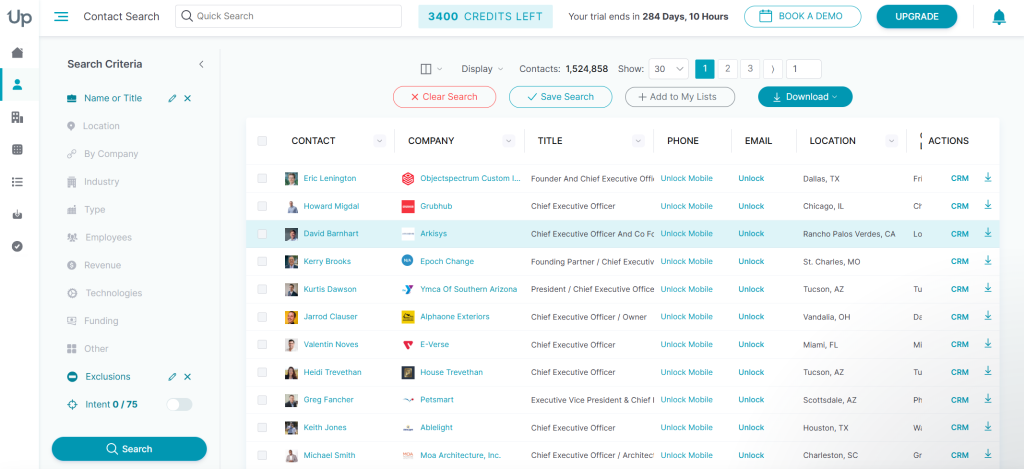
UpLead’s prospecting platform helps with list building and contact verification. Its 95% data accuracy guarantee is roughly double the industry average of around 50%, which means fewer wasted touches and more conversations with the right people.
4. Leverage LinkedIn and social media
Social media marketing drives a significant share of B2B SaaS pipeline, and LinkedIn is the dominant platform for it. 40% of B2B marketers rate LinkedIn as their most effective channel for high-quality leads, and for SaaS marketing specifically, no other platform offers the same level of audience precision.
Three approaches work for B2B SaaS lead generation on LinkedIn, and they cover different parts of the funnel:
- LinkedIn Ads: sponsored content and lead gen forms targeted by job function, seniority and company size. Best for demand generation and capturing buyers who match your ICP but haven’t found you yet.
- LinkedIn Sales Navigator: outbound prospecting to specific decision makers within target accounts. Best for SDR-led outreach and account-based selling.
- Organic thought leadership: posts from founders and sales leaders that build audience trust before a prospect ever considers reaching out. Slower to scale but the highest-quality inbound channel on the platform.
To set up Sales Navigator for daily prospecting:
- Set your account filters: Industry (your ICP sectors), Company headcount (your target size range) and a posted job title if hiring signals are relevant to your product.
- Save the search and enable a daily alert. Each morning, new accounts matching your ICP appear in the feed.
- Add the strongest accounts to a named list and monitor them for job changes and funding news. These events create a natural opening before any pitch.
- For accounts already on your list, check for first-degree connections and ask for a warm introduction before sending a cold message.
Gorgias grew its paid social channel by 3,200% in 11 months and reached $2M in ARR from LinkedIn and Facebook by targeting a single audience segment precisely (Shopify merchants) rather than running broad e-commerce campaigns. Audience precision matters more than ad budget on these channels.
5. Run paid advertising campaigns
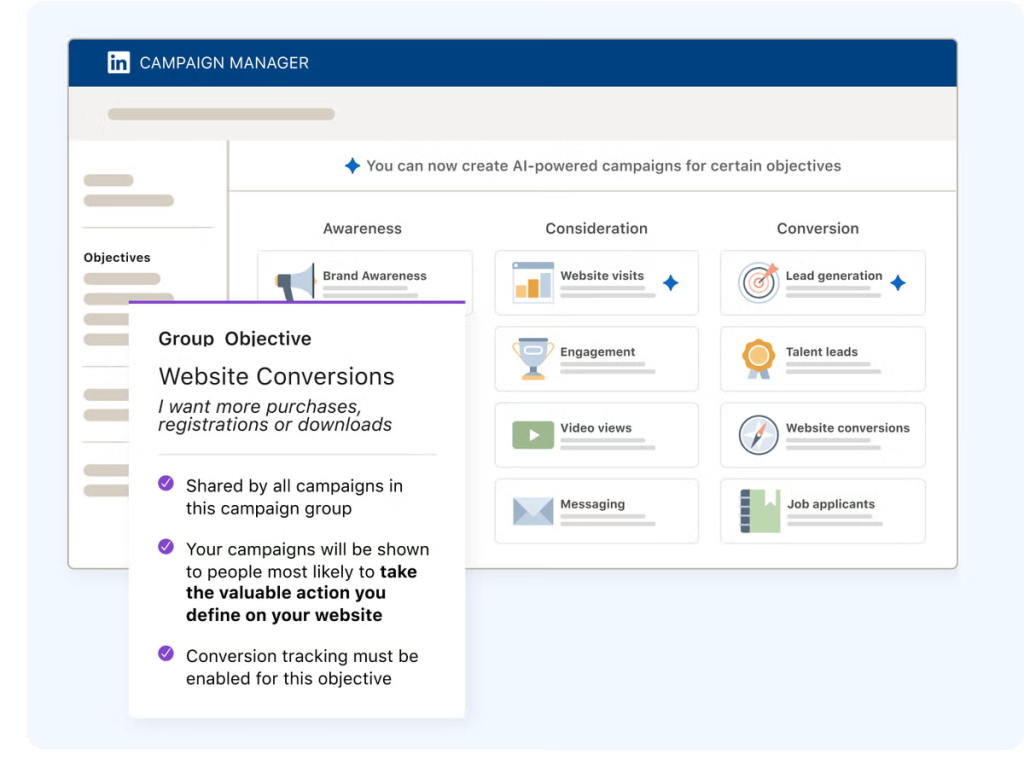
84% of brands report good results from PPC advertising. PPC ads and paid ads on social channels serve different parts of the B2B SaaS funnel and work best together rather than as alternatives.
Google Ads and LinkedIn Ads serve different parts of the B2B SaaS funnel. Using them as alternatives wastes budget. Using them together covers both demand capture and demand creation.
| Google Ads | LinkedIn Ads | |
|---|---|---|
| Best for | Buyers already searching for your category | ICP segments who haven’t searched yet |
| Targeting | Keywords with commercial intent | Job title, company size, seniority |
| Starting budget | $50–100/day, single ad group | $20/day minimum per campaign |
| Landing page | Dedicated conversion page, not homepage | Dedicated conversion page, not homepage |
| First test | Exact match keywords only | One audience, one creative for two weeks |
To avoid wasting the first month of budget, follow this setup sequence:
- Start with exact match keywords only on Google, not broad match. One tightly themed ad group for your core buying terms.
- Send every click to a dedicated landing page. Track conversions, not just clicks.
- On LinkedIn, set your minimum bid to $20/day per campaign and test one audience and one creative before adding variables.
- Cut any ad with a click-through rate below 0.4% after 500 impressions. Do not keep underperforming ads running while waiting for more data.
- Track Cost Per Lead by channel. Shift budget toward the channel producing the lowest CPL from qualified leads, not from all clicks.
6. Create gated content and lead magnets
Gated content captures contact details from buyers who are actively researching solutions. It works because the exchange is explicit: a buyer gives you their email address in return for something genuinely useful to their work.
Formats that consistently perform for B2B SaaS include original research reports, ROI calculators, competitive comparison templates, onboarding checklists and live webinars. Webinars educate and qualify prospects simultaneously, making them one of the highest-converting gated formats in the SaaS industry.
The decision about what to gate and what to keep open determines whether your gated content generates real leads or just contact data from people who wanted the free resource. Use this split as a guide:
| Gate it (mid-funnel) | Keep it open (top-of-funnel) |
|---|---|
| ROI calculators | Blog posts and explainers |
| Vendor comparison templates | Category guides |
| Implementation checklists | Industry data reports |
| Webinar replays | How-to tutorials |
| Onboarding playbooks | Product overviews |
Gated content works best at the mid-funnel stage, after a buyer has engaged with open content and is starting to evaluate specific solutions. Pair each gated asset with a nurture sequence that moves the lead toward a demo or sales conversation. Without a follow-up sequence, gated content captures emails but rarely converts them.
Later, a social media scheduling SaaS, collected over 100,000 leads from its gated resources with conversion rates near 60% by tightly matching each asset to a specific buyer question rather than using a single generic lead capture form across all content.
7. Use email automation and nurture sequences
Email marketing converts at approximately 2.4% for B2B brands. That rate climbs when messages are triggered by behavior rather than sent on a fixed schedule, because the message reaches the buyer at a moment of active interest instead of an arbitrary send time.
A basic nurture architecture for SaaS: targeted email campaigns for each segment of your list (new trial users, content downloaders, event attendees); follow-up sequences that move marketing qualified leads toward a demo request; and re-engagement campaigns for leads that went cold. Each sequence should be built around a specific lead type and a specific next action, not a generic newsletter cadence.
A proven 5-email sequence for new trial users, built around behavior triggers rather than fixed send times:
- Day 0, Activation: confirm signup and link to the single action that delivers the fastest result inside your product. No feature tour, just one clear next step.
- Day 2, Value: highlight one specific feature tied directly to the reason they signed up. Show what it does with a screenshot or short GIF, not a paragraph of copy.
- Day 5, Proof: share one real customer result in two sentences. Name the company type and the outcome, not just a generic testimonial.
- Day 8, Conversation: ask one question: “What is the biggest thing stopping you from [desired outcome]?” Replies to this email are your warmest leads. Respond personally within the hour.
- Day 12, Call offer: offer a short setup call, but only trigger this email for users who opened at least three of the previous four. Sending a call offer to disengaged users hurts deliverability.
Segment by lead source, company size and behavior inside your product. The more targeted the message, the higher the open rate and the more likely a lead is to progress toward a sales conversation on their own timeline.
Wistia restructured its trial-to-paid nurture email sequence by applying copy and structural changes to each email in the series and A/B testing the result against paid conversions as the sole metric. The rewritten sequence tripled paid conversions from trial users without any change to the product or pricing.
8. Offer free trials and freemium access
Opt-in free trials (no credit card required) convert at around 18 to 25%. The no-friction entry point removes the biggest objection in SaaS buying: uncertainty about whether the product will actually solve the problem.
Credit-card-required trials convert at closer to 2%, because the commitment barrier filters out buyers who aren’t yet sold. Modern B2B buyers increasingly prefer to research and onboard independently without interacting with sales first, which makes the opt-in trial the natural entry point. Product-Led Growth (PLG) strategies build on this: let buyers experience core value inside the product, then use targeted follow-up sequences to convert active users into paying customers.
The biggest lever on trial conversion is not the trial length or the pricing. It is whether the user reaches the activation moment before they disengage. To find and optimize yours:
- Pull your trial user data and identify which action (importing data, completing a first workflow, inviting a colleague) correlates most strongly with conversion to paid. That is your activation moment.
- Check how many trial users reach that action in the first 48 hours. If it is below 40%, your onboarding is losing people before they see the value.
- Redesign your Day 0 onboarding email to point directly at that one action. Remove everything else from the first email.
- Measure the change in 48-hour activation rate over the next 30 days. A 10-point improvement in activation rate typically produces a proportional lift in trial-to-paid conversion.
Vidyard launched a free desktop app in early 2021 and added 5,000 new business and enterprise customers in three months, a 250% growth spike driven by removing the payment barrier and letting buyers experience the product before any sales conversation.
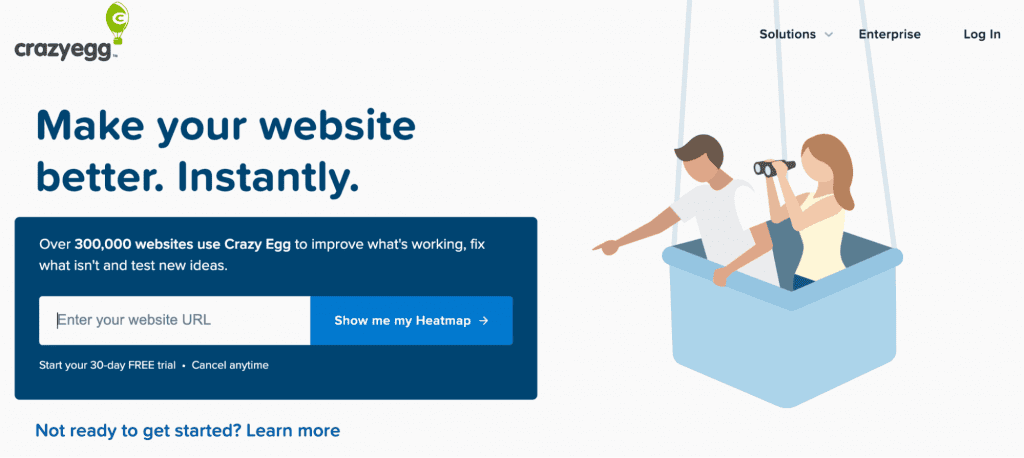
Crazy Egg tested both approaches extensively and found that gating supporting information behind a free trial sign-up (without requiring payment) increased trial starts substantially. Their approach: “balance under-and over-educating website visitors by gating supporting information” behind the free trial, giving buyers enough to get interested while saving the full product experience for after sign-up.
9. Build a B2B referral program
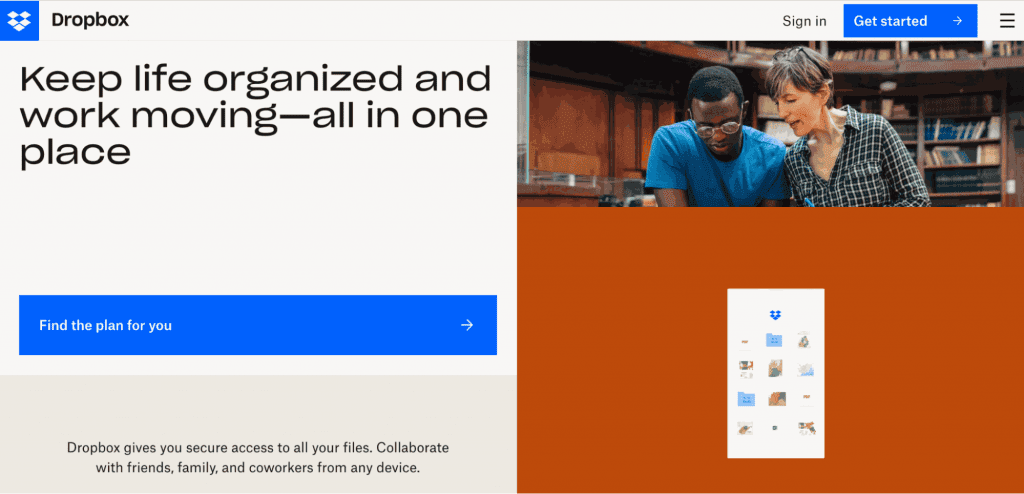
A referral program turns your most loyal customers into a consistent, low-cost lead source. Referral leads convert at a significantly higher rate than leads from other sources because trust from an existing customer removes most of the skepticism that slows a typical sales process. Dropbox’s referral program grew its user base by nearly 4,000% in 15 months, from around 100,000 registered users to nearly 4 million, and remains one of the most cited growth programs in SaaS history.
For B2B SaaS, referral mechanics work differently than they do for consumer software. The incentive needs to match the buyer’s context: discounts on subscription fees, early access to new features and account credits all work well. The referral path should be simple, trackable and reward both the referrer and the new customer.
Most referral programs fail not because the incentive is wrong but because customers forget the program exists. To build one that stays active:
- Generate a unique referral link for every customer at the moment they sign up, not weeks later. Waiting reduces participation because the initial enthusiasm has faded.
- Include the referral link in the first onboarding email alongside a clear incentive. A dollar amount or a specific feature unlock works better than a vague “reward”.
- Display the referral dashboard inside the product itself so customers track their rewards without leaving your app. Out-of-sight means out-of-mind.
- Send a reminder 30 days after signup. A single follow-up email can recover a large share of referrals from customers who never acted on the first mention.
Mainstreet, a SaaS platform helping startups claim tax credits, exceeded $3 million in revenue within six months of launching its referral program by offering a $200 incentive per qualified referral. The structure kept acquisition costs predictable while generating growth through word-of-mouth.
10. Target high-value accounts with ABM
Account-based marketing (ABM) concentrates your lead generation budget on the accounts most likely to close, rather than casting a wide net and qualifying after the fact. It’s the right approach for SaaS products with a high average contract value or long sales cycles that require buy-in from multiple stakeholders.
The ABM sales process: define your ideal account profile (industry, revenue range, tech stack, growth signals); build a target account list with your sales team; run personalized outreach across email, LinkedIn and paid channels; align marketing and sales on the same list so every touchpoint is coordinated. Each account goes through a structured buying process that may take weeks or months, so ABM requires patience and consistent multi-channel outreach to create meaningful sales opportunities.
Build your target account list in three tiers before running a single piece of outreach. The tier structure determines how much personalization each account receives and how your team allocates time:
| Tier | Account count | Outreach approach | Personalization level |
|---|---|---|---|
| Tier 1 | Top 25 accounts | Full multi-channel sequence, dedicated content | Maximum: every touch customized |
| Tier 2 | Next 100–200 accounts | Templated sequence with light personalization | Moderate: ICP-specific messaging |
| Tier 3 | Broader ICP universe | Programmatic email sequences only | Minimal: segment-level messaging |
To populate each tier: export your existing customers into UpLead’s prospector, identify the common firmographic patterns (industry, headcount, tech stack, growth signals) and run a lookalike search to find similar accounts. Then monitor all three tiers in Sales Navigator for job changes and funding news that create a natural outreach opening before any formal pitch.
ABM reduces customer acquisition cost on high-value accounts because every touchpoint is focused on a specific account and a specific set of decision makers. You spend less on leads that will never close and more on relationships that are likely to convert at higher contract values.
CINC Systems ran an ABM program that cut their average sales cycle by 32%, grew mid-funnel pipeline by over 100% and increased average deal value by 111% in a single year by aligning every sales and marketing touchpoint around a defined target account list.
11. Use AI-powered lead generation tools
Around 64% of marketers now use AI tools in their lead generation or marketing workflows, and 38% of those who aren’t using AI yet plan to start soon. For B2B SaaS marketing teams, the biggest gains are in list building, lead scoring and personalized outreach at scale.
AI tools surface high-intent accounts using signal-based outreach triggers: companies researching competitors, posting job openings in relevant roles, or showing technology adoption patterns that match your ICP. AI can also score and qualify early-stage leads based on historical conversion data, giving your team valuable insights about which prospects are most likely to convert before a single email is sent.
Ivanti focused its sales team on accounts surfaced by AI intent signals and generated 71% more opportunities, influenced $263.2 million in pipeline and grew win rates by 154% in a single year. The gain came from prioritization, not from sending more email.
Start with one signal type, measure it for 60 days, then add a second layer. Trying to track every buying signal at once produces a list no one can work. Here is the setup sequence:
- Choose one hiring signal that indicates a live problem your product solves. If you sell sales prospecting tools, companies posting for “SDR Manager” or “Sales Operations Manager” roles have both budget and urgency.
- Export those accounts from your intent platform. Cross-reference against your existing customer list and remove current customers.
- Pass the remaining accounts to your outreach team as the first batch. The opening line should reference the hiring signal directly, not lead with your product.
- After 60 days, calculate the signal-to-opportunity rate. If it is above 5%, this signal is worth scaling. Add a second signal type (competitor research intent, funding events or technology adoption) only after the first one is proven.
UpLead’s prospecting platform uses intent data to surface accounts showing buying signals, so your team focuses on leads already in motion. Combine that with AI-assisted outreach personalization and lead scoring, and you compress the time from first contact to qualified opportunity significantly.
The best B2B SaaS lead generation tools
Choosing the right lead generation tools comes down to which channels you’re running. Cold outreach needs accurate contact data and email automation (UpLead’s 95% data accuracy guarantee is the benchmark here, roughly double the industry average). SEO needs a keyword and site audit platform; referral programs need campaign tracking and reward management. The tools below are organized by strategy so you can pick what fits your current lead generation efforts without buying a stack you won’t use.
Cold email and calling tools
Cold outreach at scale requires three things: a verified contact list, email automation and a cloud-based calling platform. These tools handle all three.
UpLead – prospecting and contact data
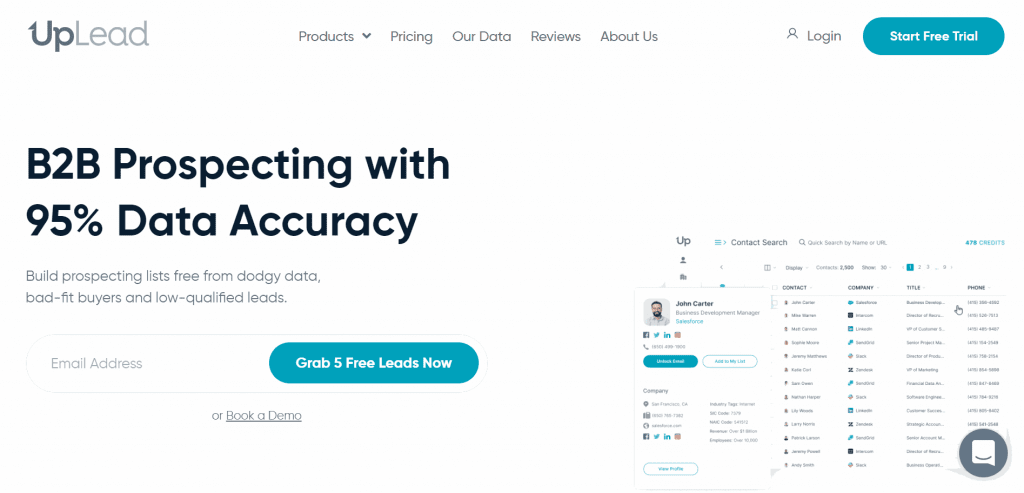
UpLead is a B2B prospecting platform with a 95% data accuracy guarantee. The industry average sits at around 50%, which means most contact databases deliver roughly one accurate record for every two, a serious problem when you’re building a cold outreach campaign and every bounce hurts deliverability.
Our prospector lets you filter by company size, industry, job title, location, technology stack and intent data signals to build targeted lists that match your ICP. Our email finder surfaces verified decision-maker contacts, and we are one of the top intent data providers in the B2B space.
Mailshake – cold email automation
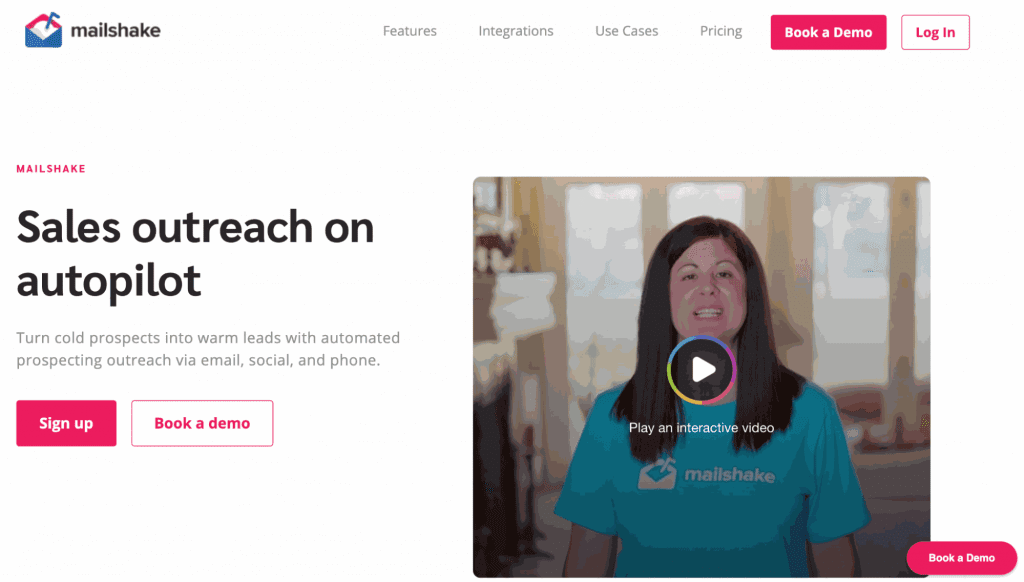
Mailshake handles the execution side of cold email campaigns. Connect your contact list, set up a personalized sequence with automated follow-ups and let the platform send, track and manage responses across thousands of contacts simultaneously.
The dashboard shows open rates, clicks, replies and meetings booked, giving your team the data to refine messaging and improve conversion rates over time. Paired with UpLead’s verified contact lists, Mailshake removes most of the manual work from outbound email campaigns.
Aircall – outbound calling
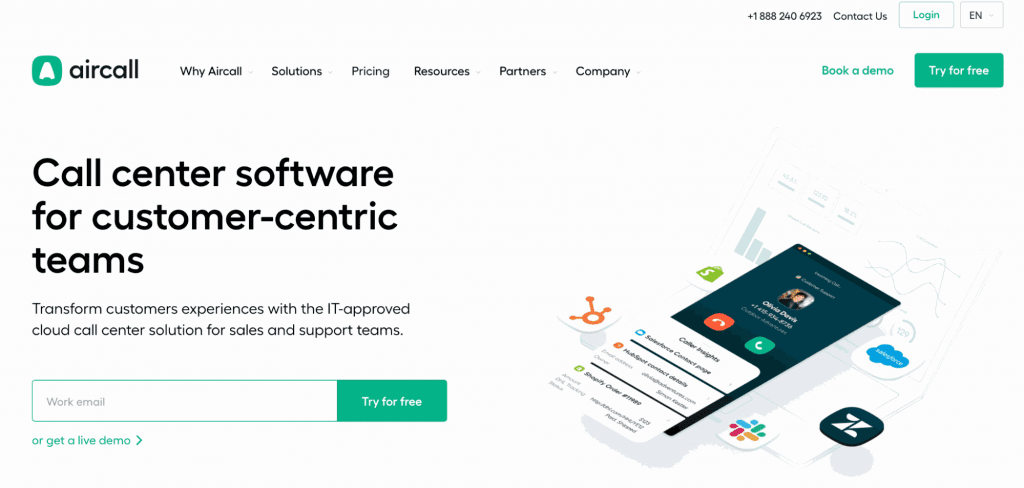
Aircall is a cloud-based phone system built for outbound sales teams. Virtual call center capabilities, toll-free number creation and interactive voice response let your team run high-volume calling campaigns without the infrastructure overhead of a traditional call center setup.
Call analytics, recording and performance reporting give managers the visibility to coach reps and improve conversion rates on voice campaigns. For SaaS teams running a multi-touch outbound sequence, Aircall handles the phone component while Mailshake handles email.
SEO and website optimization tools
Organic search requires a dedicated SEO platform and landing pages built to convert. These two tools cover both.
Ahrefs – keyword research and site auditing
Ahrefs is the SEO platform most B2B marketers rely on for keyword research, competitor analysis, site auditing and rank tracking. Its keyword explorer identifies the search terms your ICP uses at each stage of the buying journey, and the site audit tool flags technical issues that suppress your rankings before they become visible problems.
For SaaS companies building an organic lead generation engine, Ahrefs provides the data foundation: which topics to target, how difficult they are to rank for, what competitors are currently ranking for and where your backlink profile has gaps.
Unbounce – landing page creation
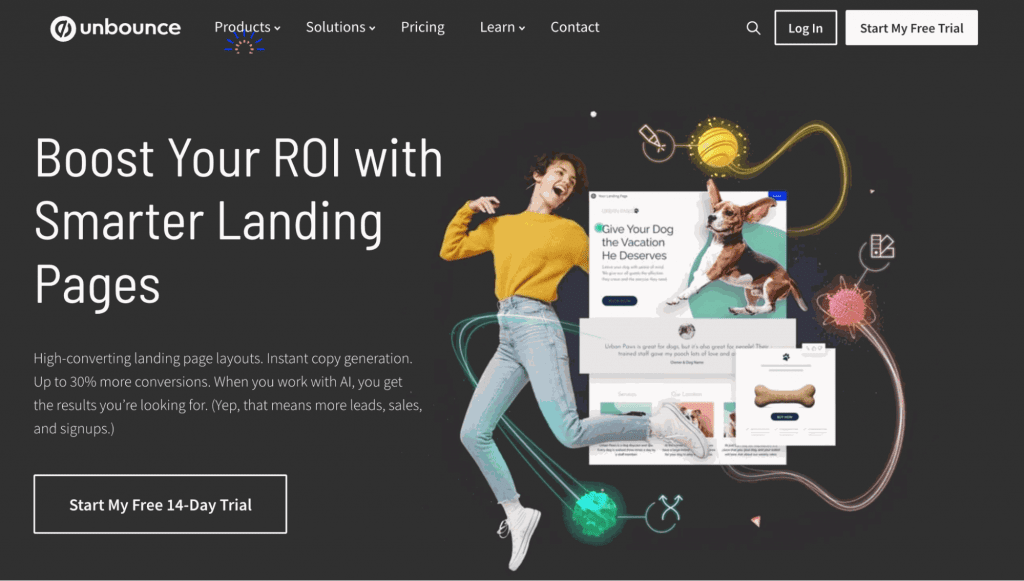
Unbounce lets you build, test and optimize landing pages without touching code. The drag-and-drop builder and conversion-focused templates are designed for the specific challenge of turning paid traffic and gated content campaigns into leads.
A/B testing, conversion analytics and SaaS-specific landing page templates give your team the tools to iterate quickly and improve conversion rates without waiting on a development queue. Unbounce integrates with most CRM and email platforms, so leads flow directly into your nurture sequences after converting.
Referral and partnership tools
Managing a referral program manually (tracking referrals, distributing rewards, monitoring campaign performance) quickly becomes unscalable as your customer base grows. Ambassador handles the infrastructure.
Ambassador – referral program management
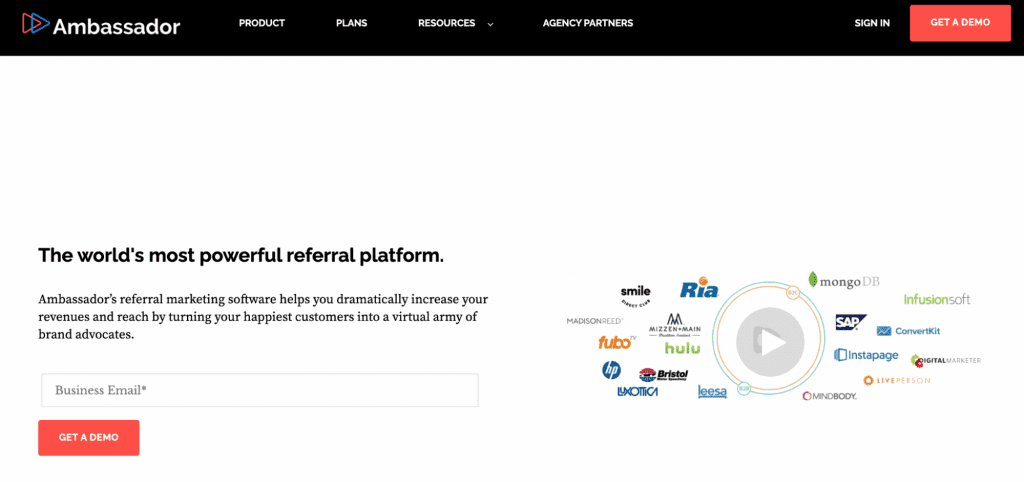
Ambassador is a referral management platform that handles partner programs, influencer campaigns and affiliate programs from a single dashboard. Create automated referral campaigns, track performance by referrer and run A/B tests to identify the incentive structure that converts best.
For B2B SaaS companies, Ambassador’s account-based tracking and CRM integrations make it practical to run a referral program at scale without creating manual reconciliation work for your team.
B2B SaaS lead generation FAQs
A SaaS lead is a business or individual that has shown interest in your software product and could become a paying subscriber. Leads can be inbound (found through content, search or referrals) or outbound, where your sales team initiated the first contact. Either way, the goal is the same: move them from awareness to a signed contract.
A marketing qualified lead (MQL) has engaged with your content or advertising but is not yet ready for a sales conversation. A sales qualified lead (SQL) has been reviewed by your sales team and is ready for direct outreach or a demo. The key distinction is readiness: an MQL needs more nurturing, while an SQL is prepared to talk to sales today.
Qualifying a SaaS lead means confirming that the buyer fits your ICP, has the budget and authority to purchase, and has a timeline that makes them worth pursuing now. For inbound leads, qualification usually happens through a discovery call or a detailed demo request form. For outbound leads, your sales team qualifies through the first few touches by asking targeted questions about role, problem and timeline.
The three most common mistakes are: an ICP that is too broad (every contact feels relevant but none convert at acceptable rates), neglecting lead nurturing (handing MQLs to sales before they have shown enough buying intent), and relying on a single channel instead of building a mix of inbound and outbound sources that balance short-term and long-term pipeline.
No single channel works best for every SaaS business, but the most consistent combination is content and SEO for long-term inbound pipeline, cold outreach for immediate results, and LinkedIn for targeting specific decision makers by company and role. 40% of B2B marketers call LinkedIn their most effective channel for high-quality leads, which makes it a strong anchor for any B2B SaaS lead generation program.
No lead generation program works perfectly from day one. The strongest SaaS companies pick two or three channels that fit their market, measure what converts, and double down on what works. UpLead handles the prospecting side: accurate contact data, verified emails and intent signals that tell you which accounts are actively in market. Start with a free trial and see how many of your target accounts are already in our database.


