


After quite a few years of working alongside creators building print on demand stores, I’ve noticed something. Most people tend to assume the “best products” to sell are always the same.
Obviously, that’s not completely wrong. If they’re produced in the right quality, things like t-shirts, sweaters, and mugs always seem to do well. But really, the best products tend to depend on a few things, including the platform you’re using, and your audience.
For instance, if you’re using Fourthwall, you’re getting premium quality straight away, which means you’re not just looking for random cheap stuff you can sell at a low price. You’re looking for products that keep people coming back. If you’re a creator, you’re not just building another ecommerce store, you’re designing a merch collection for a community of avid followers.
Both of those things change what you should add to your catalog.
The Best Fourthwall Products for Creators
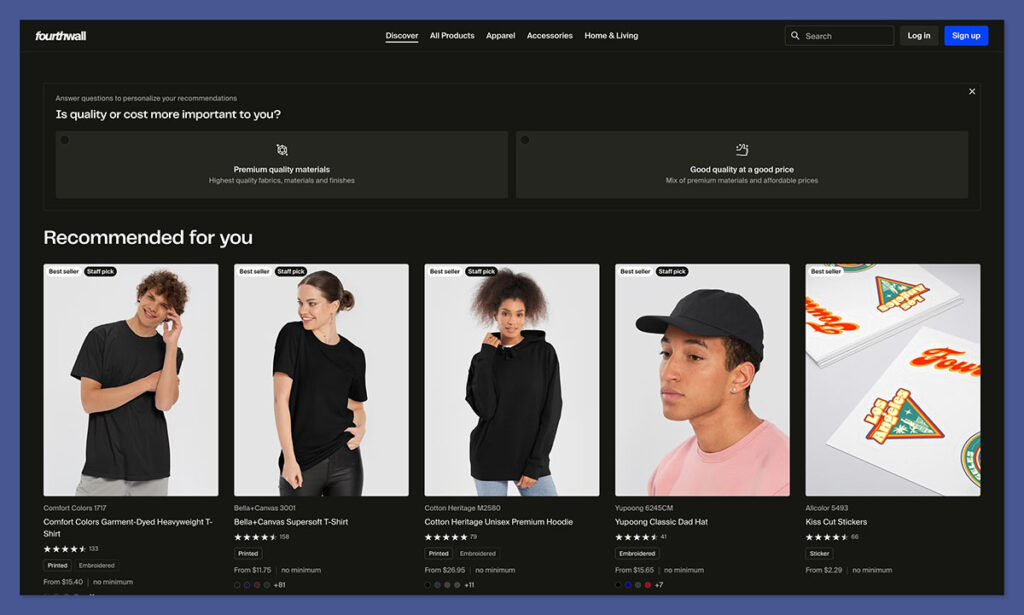
After looking at enough creator stores (and watching a lot of them stall), I’ve ended up with a pretty simple filter for whether a product is actually worth launching. It’s not about what can sell. It’s about what does sell in a creator context.
Here’s what I think matters:
- How easy it is to say “yes” too. Things like stickers and mousepads are cheap enough that they barely require any real thought.
- What it does to your brand value. Stuff like premium t-shirts, thick hoodies, unique plushies and enamel pins help you stand out.
- Operational risk. Are you dealing with any possible sizing issues, print inconsistencies, or shipping delays that could harm margins?
There’s also platform fit. With Fourthwall, you’ve got someone handling tax, support, fulfillment, and even relationships with providers for you, so the risk level is a lot lower, even for niche products.
I should note, I also had a quick look at what Fourthwall actually found out for itself when it started looking for insights into what was really selling through its platform lately. Some of the top products were pretty obvious, t-shirts and hoodies still rank towards the top of the list. Other products were more surprising.
Premium T-Shirts
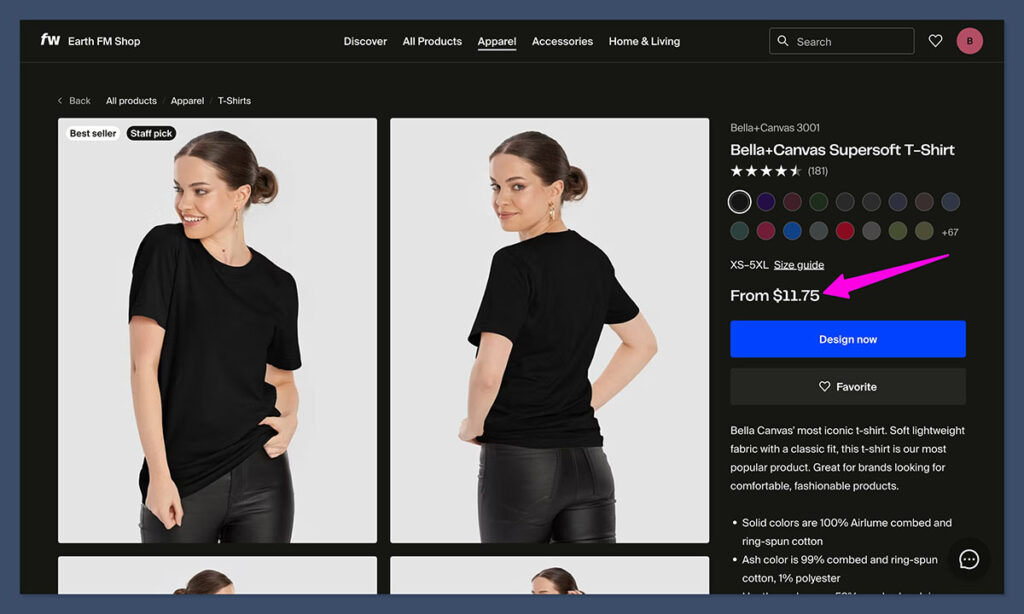
Yes, t-shirts are still the go-to for any print-on-demand company, and still the number one product on for Fourthwall users, according to the company’s recent findings. That makes sense. The custom t-shirt printing market is set to hit a value of $20.05 billion by 2035, so clearly demand is still there.
Even with all the newer product types available, creators aren’t moving away from tees. They’re just getting more selective about what they put on them. Which is exactly what you’d expect in a market this big. Premium sells, generic poorly-made shirts don’t.
A good t-shirt now needs to pass a simple test: would someone wear this even if they weren’t trying to support you? If the answer’s no, it’s probably not going to move.
I think Fourthwall’s setup actually helps a lot here, because it’s not giving you the chance to browse through hundreds of different shirts from various sellers, looking from the cheapest option.
You get a curated collection of high-quality products, ranging from Bella+Canvas, to Comfort Colors, and Fourthwall’s Signature collection. You can still choose a “cheaper” shirt, of course, but you know immediately that you’re going to get consistent quality, because Fourthwall works with suppliers to ensure it, making sure they set their machines for excellence.
Hoodies & Crewnecks
T-shirts are easy. People will take a chance on them. Hoodies ask people to spend real money, so if you’re not delivering something amazing, you’re not going to make a profit.
Still, the market is huge, worth about $256 billion in 2026, so clearly these products can sell. Hoodies sit right behind t-shirts in Fourthwall’s internal data too, which isn’t surprising, but it does reinforce the point. Again though, quality counts. If a hoodie feels thin, or the print cracks after a few washes, it doesn’t get forgiven as “just merch.” It gets compared directly to everything else someone owns.
Remember, you’re not just selling to fans, you’re competing with Uniqlo, Nike, and whatever someone already has in their wardrobe. Once again, Fourthwall gives you the premium feel you actually need, especially with the Signature collection. It also gives you the freedom to branch out into a few “less saturated” categories in apparel, like kids clothing (an underrated option), long-sleeve tees, tank tops, and sweatshirts.
With most of these things, particularly sweatshirts and hoodies, you do pay more for the base product, but you can also sell what you create for something closer to $65-$75 without making customers second-guess the purchase.
Hats & Beanies
Hats and beanies sometimes feel like a “secondary” product that gets added to the “accessories” page on your store when you feel like the options are a bit thin. Really, though, they can be some of your biggest revenue drivers. Fourthwall says hats are now the fifth most popular product they offer.
The global hats market is projected at around $11.6 billion in 2026, with broader headwear pushing well beyond that. That’s not driven by fandom. It’s driven by everyday wear.
A hoodie with a big graphic is clearly merch. A clean embroidered hat? That’s just… a hat. Someone can wear it anywhere without explaining it.
You’re not asking someone to signal “I follow this creator.” You’re giving them something they’d wear anyway, just slightly customized.
If you take this route, I recommend sticking to small embroidery and subtle branding. Try a range of styles from beanies to dad hats, and see what appeals to your community.
Stickers & Magnets
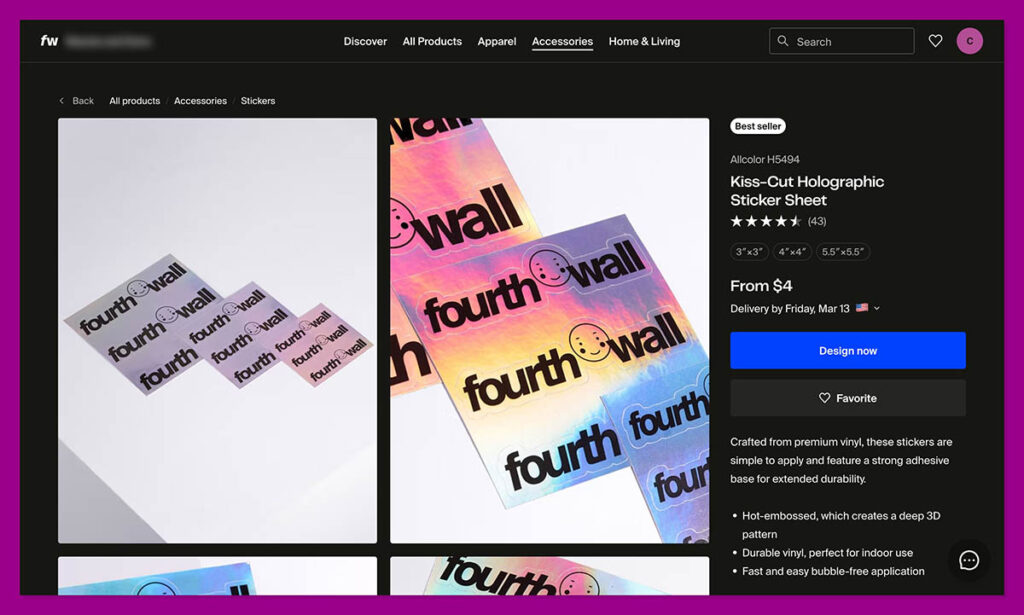
This is another category that gets written off as “filler” unless it’s done properly.
The personalized stickers market is projected at around $5.1 billion in 2026, and that’s not being driven by kids decorating laptops. It’s ecommerce, branding, packaging, collectibles, small-batch creators. What makes these products so great is how easy they are to sell.
Stickers are now one of the fastest-growing product categories on Fourthwall, partially for that reason. It doesn’t really take much to convince someone to buy a sticker or a magnet, particularly if they’re already buying a t-shirt. Plus, with Fourthwall, there’s very little pressure to “make sure they sell”.
You’re not paying a monthly fee to keep the store running, so if your low-ticket items don’t sell constantly, that’s fine. They can just be the thing that gently bumps up your average order value, or makes your bundles look a little more appealing.
Magnets, in particular, are compelling because they feel more premium than a standard sticker. You can still offer them for a low cost, and make customers feel like they’re getting something unique.
Mugs & Tumblers
Mugs and tumblers are kind of like t-shirts in a way. They’re not exactly “statement products”, but they consistently sell, and they rank towards the top of Fouthwall’s top-performing categories list.
The global drinkware market is sitting at roughly $39.6 billion in 2026, and it’s one of those categories that just doesn’t slow down. People replace mugs, collect them, or buy them as gifts. That stability means you’re not relying on trends. You’re just selling something people already use every day. For creators, that’s a whole different kind of opportunity.
A hoodie gets worn occasionally. A mug gets used daily. That means your brand sits in someone’s routine, not just their wardrobe. Fourthwall makes this category easy to test too. Base costs starting around $5–$6, which leaves plenty of room to price in the $15–$25 range without making it feel expensive.
Plus, because fulfillment and support are handled behind the scenes , you’re not dealing with the usual “my mug arrived chipped” emails that tend to come with fragile products.
Desk Mats & Mouse Pads
Desk mats and mouse pads are usually overlooked by other POD merchants, which I think is a shame, particularly since products like “desk mats” are now one of the biggest surprise hits offered by Fourthwall. It makes sense, really. Creators have an excellent opportunity to promote these products all the time. They can show them off on streams, and even add a link for customers to buy directly while they watch.
Fourthwall is particularly good for this because it integrates with stuff like YouTube merch shelf, and Twitch, so you don’t have to send anyone to a different page to buy.
The broader mouse pad and desk accessory market is also growing steadily alongside gaming, remote work, and content creation. Projections put the category moving toward the multi-billion range over the next few years, with workspace personalisation driving a lot of that growth.
Like mugs, desk mats and mouse pads aren’t novelty products, they’re practical. It’s easy to justify buying one, even if you’re not a creator’s number-one fan.
Plushies & Enamel Pins
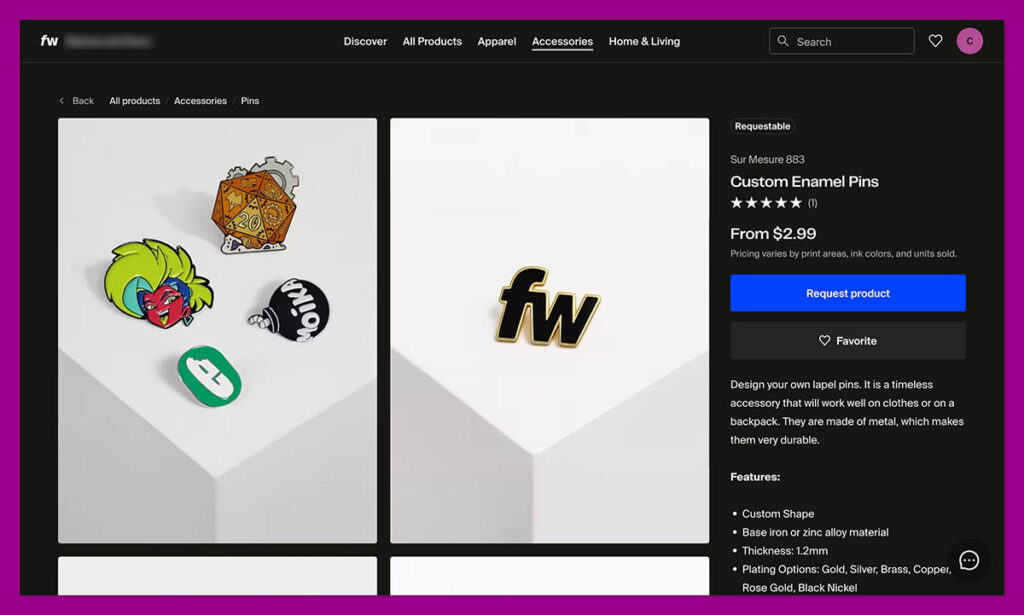
This is more of a “later stage” product category for most creators, because it’s success really depends on how much of a committed community you have. People don’t buy pins and collectibles the same way they buy mugs or shirts.
Still, if you’ve got a passionate audience, this category can really help you stand out. The speciality pin market, for instance, is expected to be worth more than $5.1 billion by 2033, and they don’t cost a fortune to sell. They can feel like a premium add-on alongside stickers and magnets, for true fans.
On Fourthwall, pins aren’t replacing core products, but they’re showing up more often in stores that already have traction. Usually tied to drops, milestones, or community-specific moments.
Plushies work best when your identity supports them. If you’ve got a mascot or a recurring visual theme, a plus turns that into something physical people can display, gift, or take photos with.
Both options are excellent for limited-time drops too. The exclusivity of a “limited run” purchase gets people excited to buy.
Building Your Fourthwall Product Collection
I’m not saying you should sell every one of these products straight away. It does generally make sense to start with the stuff you know will sell, like t-shirts, a sticker or magnet set, hats, and a few mugs or tumblers. Once you have a really dedicated community, you can start branching out into premium sweaters and crew necks, plushies, enamel pins, and collectibles.
It’s all really about experimenting and finding the collection that works best for your brand, and the audience you’re trying to reach. The good thing that Fourthwall does is make it easy to run that experiment. You can test items that you know are always going to be high quality, without worrying about upfront expenses.
You can sell directly on your streams and through content. You can also add extra revenue streams like memberships and digital products without having to invest in another platform. All the while, Fourthwall handles the complicated stuff like taxes, and some elements of customer service for you.
That means you get to focus on building and maintaining your audience, which is often where higher sales come from in the long-term.


