


Marie-Alice Harel is a French author and illustrator based in Edinburgh, Scotland. She has illustrated classics such as The Neverending Story, designed a Britannia coin for the Royal Mint, and worked for clients including Aardman Animations, Bloomsbury, Faber & Faber, Hachette and Penguin Random House.
Outside of her client work, Marie-Alice writes, illustrates and designs her own books, and teaches a book illustration course on Schoolism. Most recently, she’s illustrated a 40th anniversary limited edition of Diana Wynne-Jones’ Howl’s Moving Castle, published by Folio Society on 24th March 2026.
Inside Marie-Alice Harel’s studio
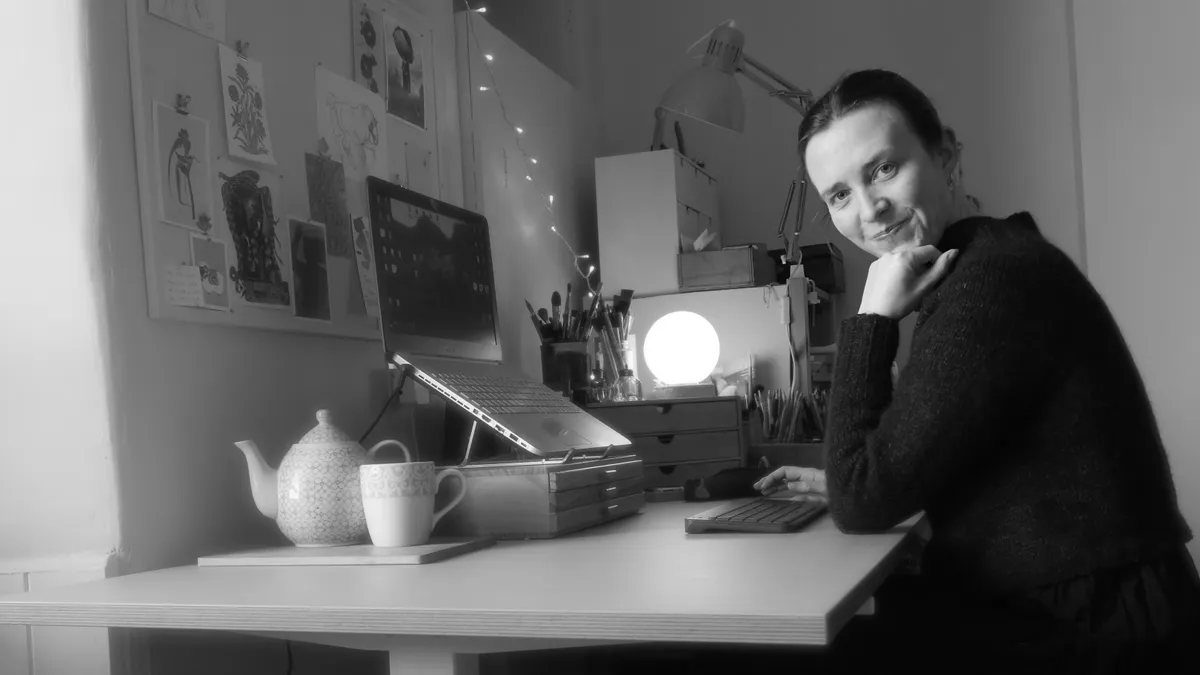
“I moved here in the middle of the Covid lock-down, so for the first six to eight months I had no desk, and generally very little furniture. As soon as Ikea got some of their stock back, I purchased a manual standing desk from them, as well as shelves etc.
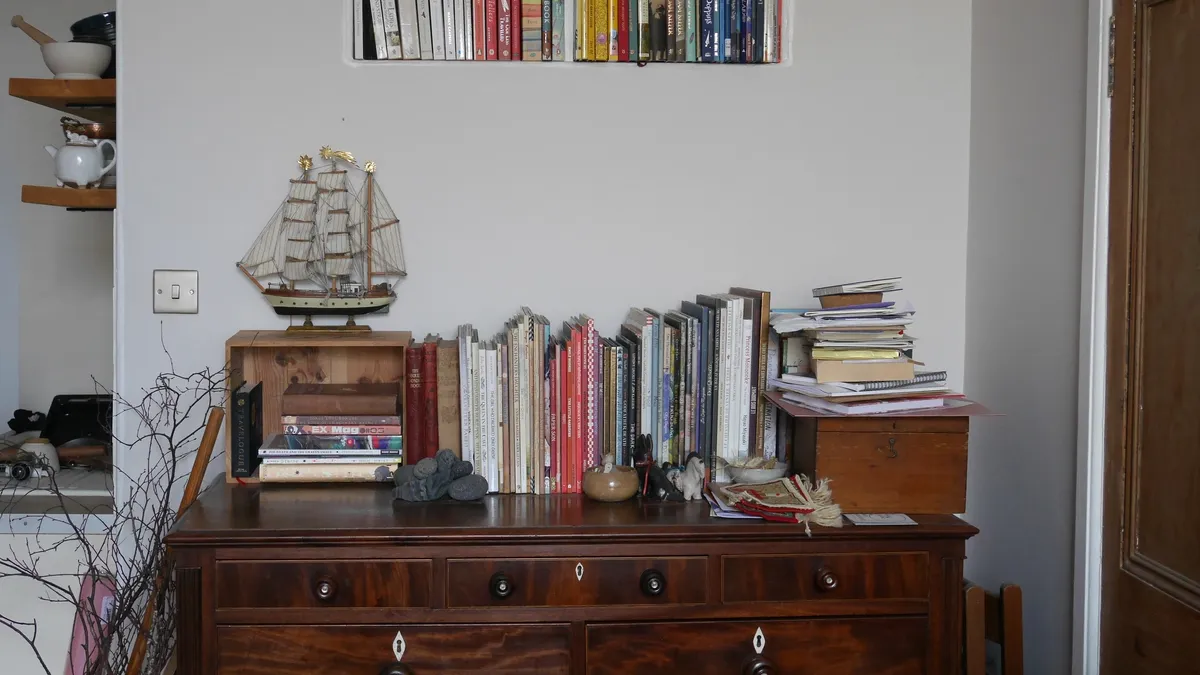
“Over time, I added thrifted pieces of wooden furniture that I found around Edinburgh. I like the calming effect of natural wood, how it ages and carries a story. Old furniture is beautiful.
“I always try to improve the functionality of my studio and make the most of the limited space. It’s a work in progress, but there’s little that gets added or removed now, I think I must be close to the optimal configuration!
“Working from home suits me because it allows me to save the expense of hiring a studio. That gives me more freedom and flexibility to manage my time and my projects.
“It’s also a good environment for me because I am sensitive to noise, and easily distracted (and drained) by the presence of people. That said, the struggle with working from home is the absence of work/life boundaries. I often find it hard to rest and switch off.
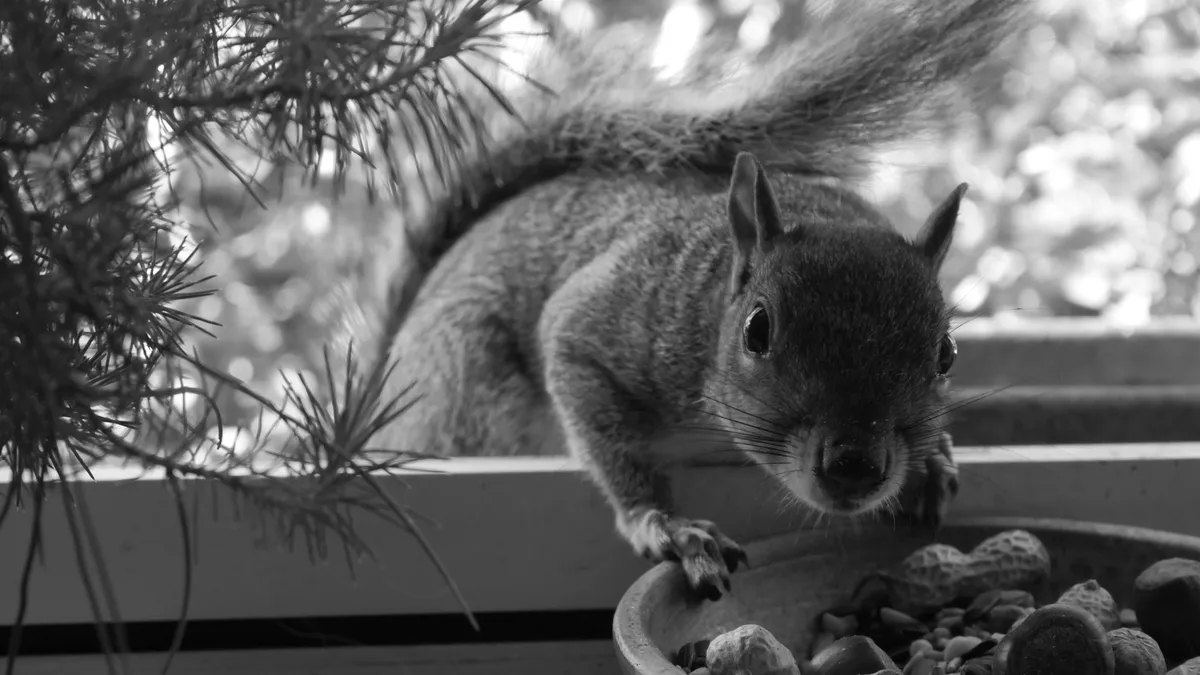
“What I love best about my studio is the company that shows up at my window. I made friends with the local pigeons, birds and squirrels. They have become an essential part of my days – they inspire my work and remind me to take breaks.
“They are a welcome presence, without being too distracting, as creative work is a very solitary practice. I hope I’m a positive addition to their lives too.
“If I could change one thing, I would definitely add a window. The light can be really bad, especially in winter. My flat is north-facing, which means that not a single drop of sunlight steals in. It can be a bit depressing, but it also forces me to get out for walks. Walks are always a good idea.
“Other issues I’ve faced include leaks from the roof, and noise from neighbours. If I had a magic wand, I would soundproof everything everywhere I go – and make sure that my books stay dry.
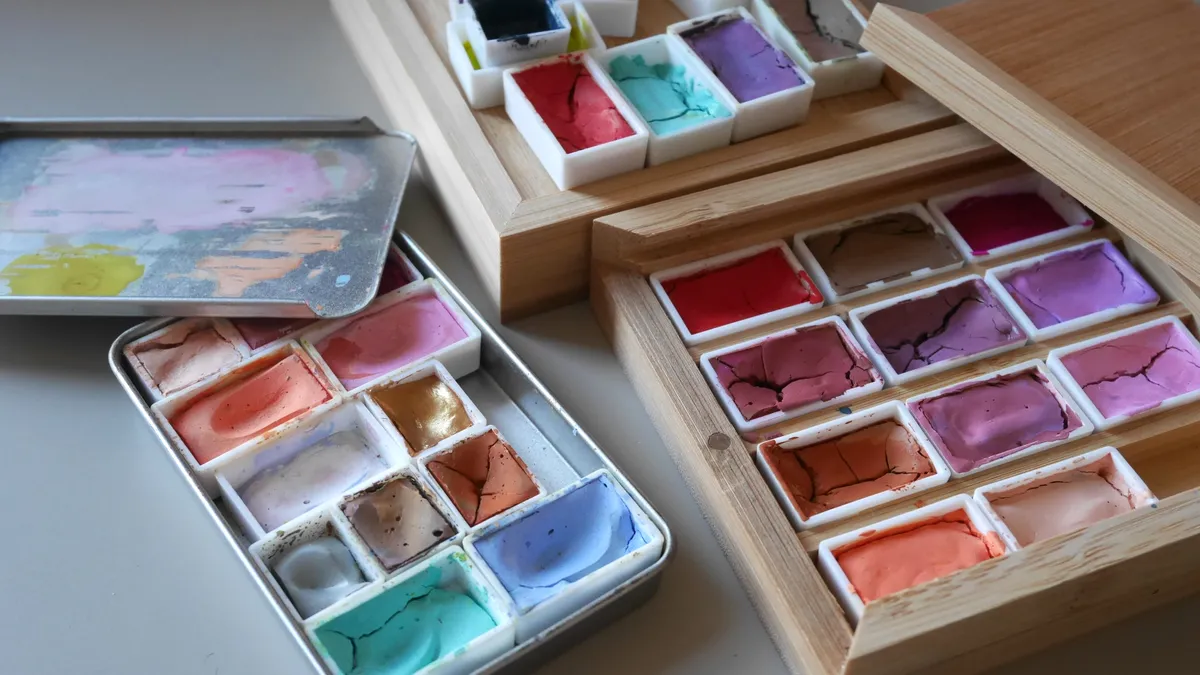
“My work is traditional, I use technology and screens as little as possible. I want to feel the materials, experience the tactile quality of paper and paint as much as I can. Painting is very physical, my mind is just as immersed in the process as my body is.
“I primarily use watercolour (no favourite brand, as long as the pigments are light-fast and artist-grade), pencils (mostly Polychromos by Faber-Castel) and inks. I stretch heavyweight watercolour paper overnight on boards to make sure that the paper doesn’t ripple when I paint wet on wet. It adds extra steps to the process but it’s worth it.
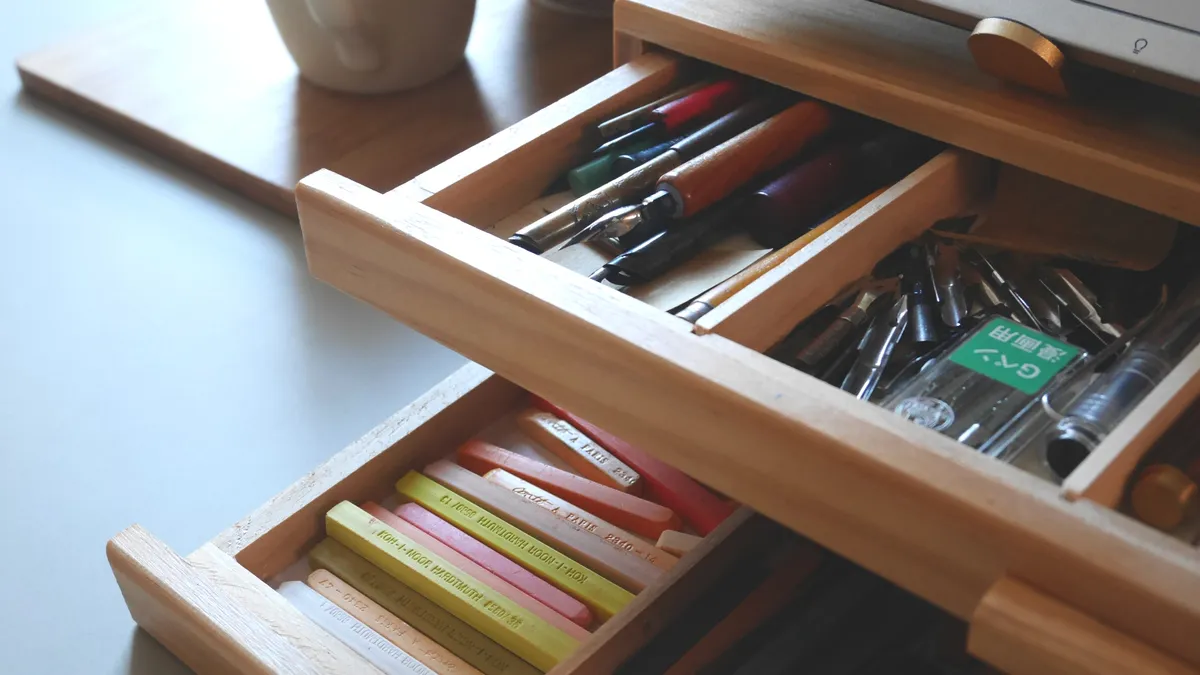
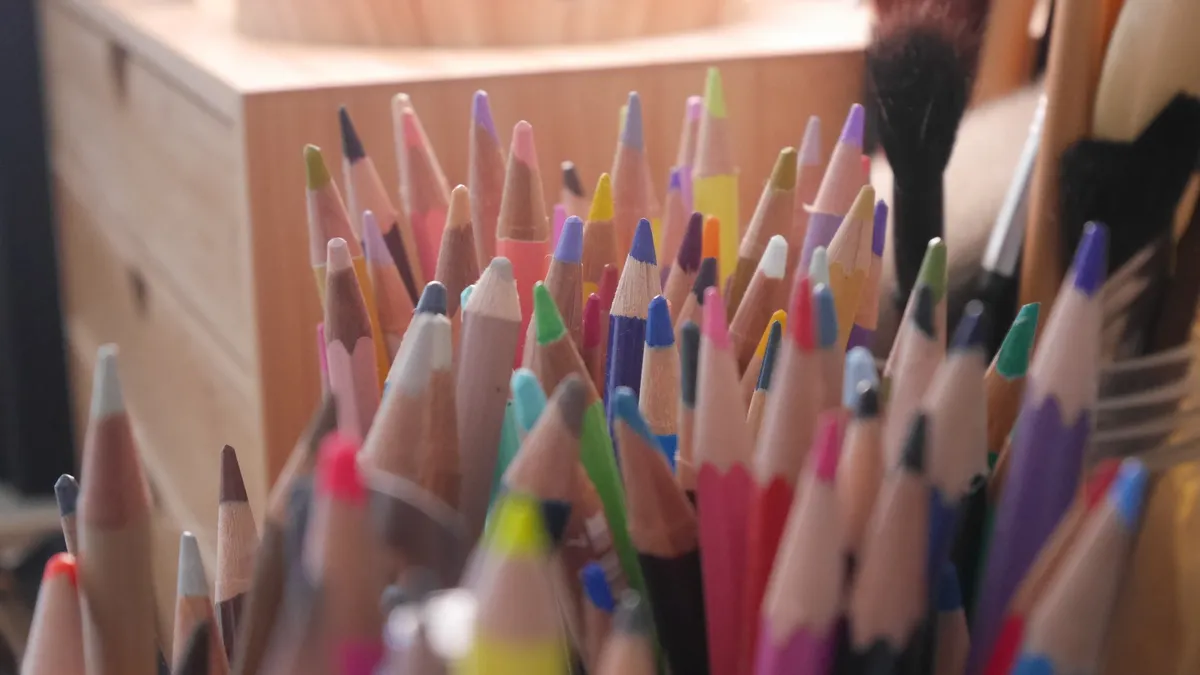
“Over the years I’ve added more mediums to my practice, and now I routinely use pastels and gouache in addition to my usual watercolour and pencil base. I made myself little gouache palettes, mixing my own colours.
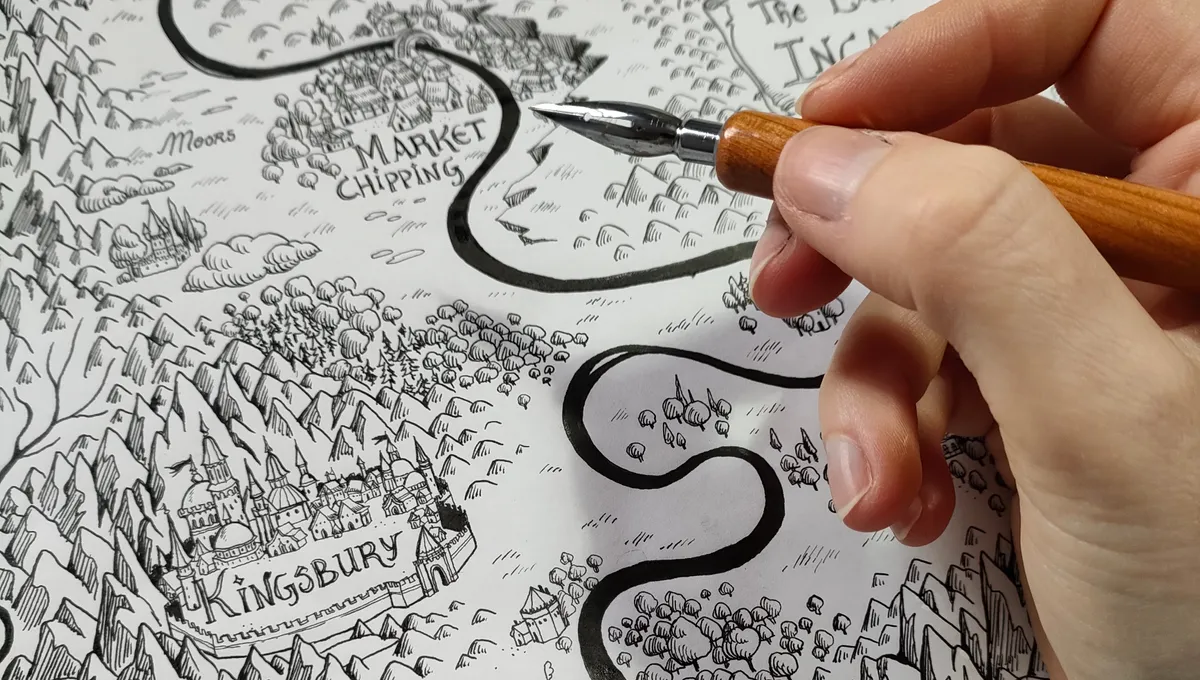
“For black and white illustrations, drawings and lettering, I like to mix ink with pencil and graphite, often using dip pens and various nibs I’ve collected from my travels. They give a line quality that is more alive, more interesting to me.
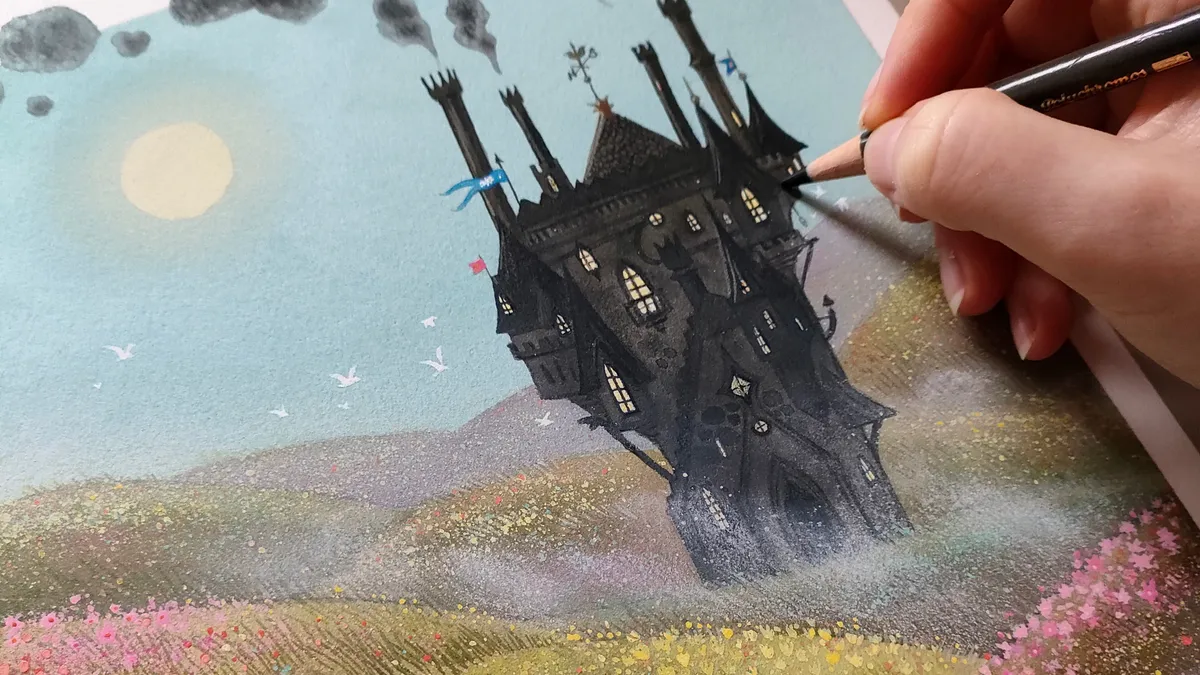
“Besides illustration, other creative outlets regularly appear on my desk: marbling, linocut, bookbinding, foiling, photography, as well as ceramics and embroidery.
“I try to keep everything organised by dedicating a drawer (or two) to each one. But I often end up with piles of in-progress work on every available surface. When I’m marbling, the whole floor gets covered as well.
“An inclined drawing board is essential when drawing, as it reduces fatigue but also prevents optical distortion: the eyes must be at a 90 degree angle to the paper.
“After many years of trial and error, I recently invested in an ergonomic chair to try to protect my back and neck. It’s not perfect but it helps a lot. When I’m painting, I use a stool instead of the chair, because I need to lean forward more.
“Other pieces of equipment I use routinely: a lightbox (to transfer drawings to watercolour paper), a scanner, and noise cancelling headphones (to stay sane when my neighbours have their TV on).
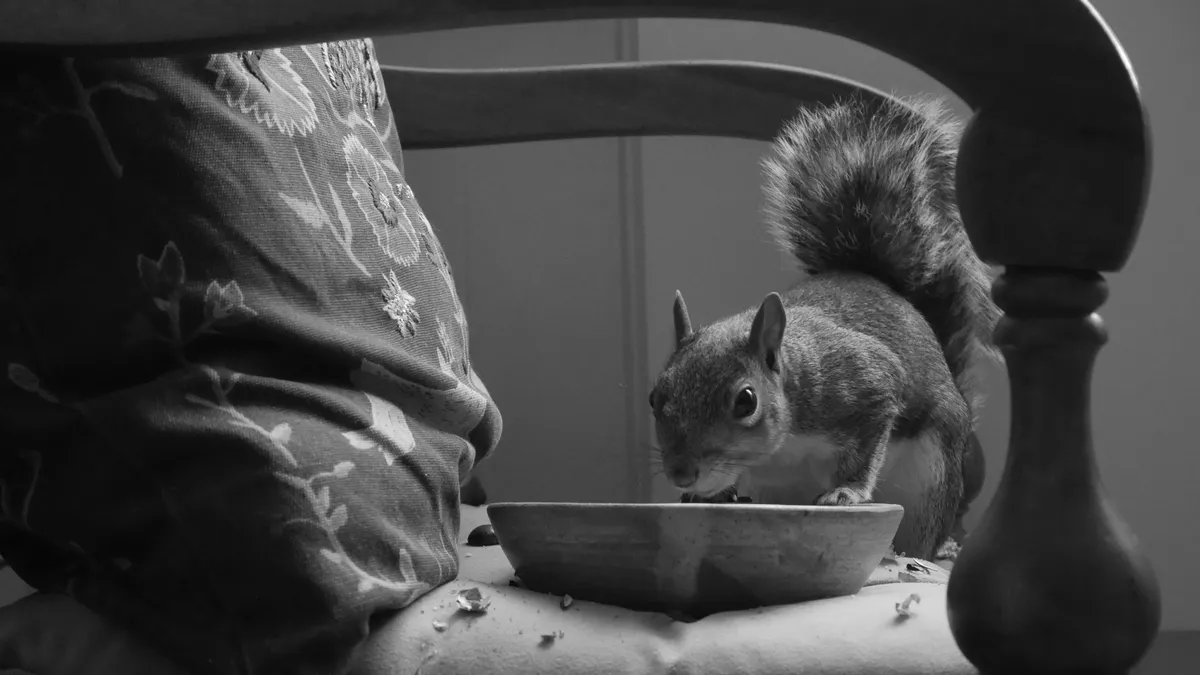
“And of course, I always need to have a ready supply of seeds, nuts and water for my little window visitors. It’s their space as much as it is mine now. In the summer, my window is always open and some of the squirrels (the ones who know me best) like to come inside to look around and have a snack.”


